


Ovulation Symptoms You should familiarise yourself with ovulation if you’re preparing to expand your family and learning more about conception. Exactly when you ovulate varies for everybody, but happily there are ways to recognise the signs of ovulation and schedule sex correctly to maximise your chances of getting pregnant.
To be honest, I had no idea how my body reacted to ovulation before to delivering my first child. I had no idea what ovulation symptoms to look out for. However, after giving birth to my first child, I became more aware of my body and saw several very subtle but unmistakable signs.
When it came time to start trying for baby No. 2, I felt at least slightly more in control because I was more aware of how I felt both physically and psychologically as ovulation neared. I was able to use these subtle ovulation symptoms to achieve success in our baby-making endeavours.
It’s crucial to understand ovulation indications even if you’re not attempting to get pregnant just yet. They can not only give you a better understanding of your menstrual cycle, but they can also help you recognise any indicators of irregular ovulation in the future. As a means of preventing pregnancy, some women really monitor their ovulation patterns.
Do you want to know more about the specifics of ovulation? We chatted to five ob-gyns to get the lowdown on which indicators of ovulation to look out for and how those ovulation symptoms can make you feel. Keep reading for all the professional intel.
Key Takeways
The primary clues: The most consistent physical indications of ovulation to watch for include changes in cervical mucus (becoming clear and stretchy, like egg white) and a prolonged rise in your basal body temperature (BBT) following a tiny fall.
The window of fertility is crucial: The five days preceding ovulation and the actual ovulation day comprise the six-day window during which you are most fertile. The two to three days prior to ovulation are most likely when conception occurs.
Ovulation is short: The egg itself is only viable and ready for fertilisation for around 24 hours after it is released from the ovary.
Timing varies: Ovulation does not always happen on day 14; it occurs around 14 days before your next period, so the timing will vary according on your personal cycle length.
Absent ovulation symptoms? While ovulation symptoms like moderate pelvic pain (Mittelschmerz), breast tenderness and light spotting might occur, most women have no obvious signs of ovulation.
What Is Ovulation?
Let’s get down to brass tacks: What actually happens on the day of ovulation? You probably learned in health class that ovulation marks the point in your monthly cycle when your ovary releases a mature egg, setting the stage for fertilisation. Every woman carries millions of immature eggs at birth, and the ovaries usually release one egg at a time each month. During ovulation, your body increases production of luteinizing hormone (LH). This hormone surge triggers the ovary to release an egg, which then travels down the fallopian tube, where it may meet sperm and become fertilised. For the majority of healthy women, ovulation occurs once a month, usually a few weeks after menstruation begins.
Ovulation Symptoms and Early Fertile Signs
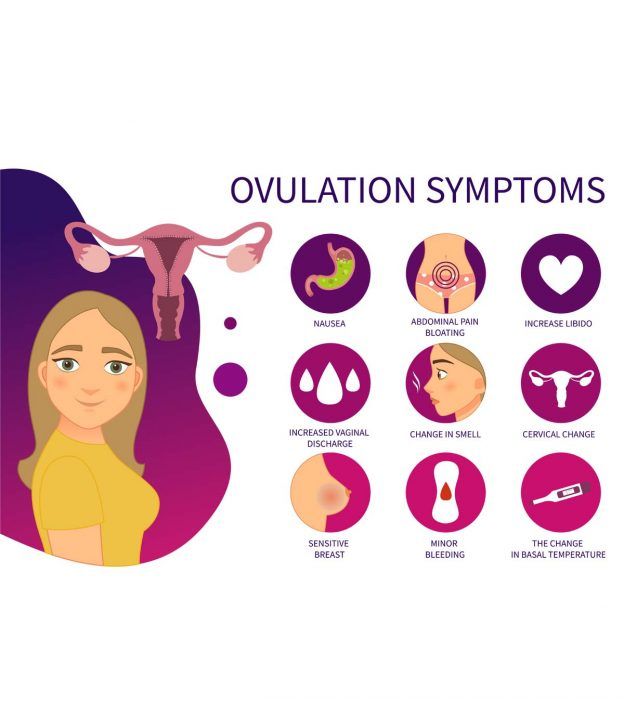
You may wonder if you can actually feel ovulation. The experience differs from woman to woman, but many women notice some common ovulation symptoms. Before and during ovulation, hormonal changes affect the entire body and trigger these symptoms. They give you strong, though sometimes subtle, clues about when you are ovulating. Patricia Pollio, MD, director of obstetrics at Good Samaritan Hospital in Suffern, New York, explains that many women feel ovulation symptoms for up to five days before ovulation and on the actual day. These symptoms may also continue for about a day after ovulation.
If you don’t notice any symptoms, don’t worry—ovulation can still occur. Donnica L. Moore, MD, president of Sapphire Women’s Health Group in Chester, New Jersey, says, “Most women have no clue.” Even so, when you learn to recognise the usual indicators of ovulation described below, you can better anticipate when ovulation is likely to occur.
Ovulation Symptoms: Basal Body Temperature Changes
Your body’s resting temperature is called your basal body temperature, or BBT. According to the Cleveland Clinic, your basal body temperature usually stays relatively constant at the start of your cycle, averaging between 97 and 98 degrees Fahrenheit. As ovulation approaches, your BBT may drop slightly and then rise sharply—usually by 0.4 to 1.0 degrees—right after ovulation. This temperature shift can signal ovulation even if you don’t feel any physical symptoms. During and after ovulation, your basal body temperature rises and stays elevated until your next period.
When you measure your basal body temperature every day for a few months, you start to recognise your personal pattern and identify significant changes more easily.
Ovulation Signs: Cervical Mucus Changes
You may also notice changes in cervical mucus as a sign of ovulation. As you approach ovulation, your body produces more oestrogen. This hormone causes cervical mucus to become stretchy, slippery, and clear—similar to raw egg white. This texture helps sperm swim more easily toward the egg released during ovulation. Moore notes that most women experience cervical mucus changes, but you need to know what to look for.
Each woman produces a different amount of cervical mucus with a unique appearance and texture. To check it for ovulation, slide a clean finger into your vagina, remove some mucus, and slowly stretch it between your thumb and finger. If it feels sticky and elastic or very moist and slippery, you likely have entered a fertile phase.
Breast Tenderness as an Ovulation Symptom
Tender breasts or sore nipples can signal ovulation because hormones surge shortly before and during this phase. Some women feel this breast discomfort just before ovulation, while others feel it right after ovulation occurs. Jenna Turocy, MD, an ob-gyn and reproductive endocrinologist with Columbia University Irving Medical Centre in New York City, points out that breast discomfort can also appear at other points in the menstrual cycle. She explains that hormonal shifts, not just ovulation itself, typically cause these sensations.
Pelvic Pain as a Sign of Ovulation
Many women ask, “Can you feel ovulation?” For some, the answer is yes. They feel a mild ache or soreness in the lower abdomen, usually on one side (and not always the same side each month). This ovulation pain, called Mittelschmerz, can feel like a strong or mild cramp on the side of your belly where the ovary releases the egg. The pain may last from a few minutes to many hours.
Along with this mild soreness or pain, which usually remains minor and short-lived, you may also notice light vaginal bleeding, discharge, or slight nausea.
Moore explains that if an over-the-counter anti-inflammatory medication (such as Motrin) relieves the ovulation pain, you generally don’t need to worry. However, she advises you to consult a physician if your ovulation pain feels severe or persists over time, so they can rule out conditions like endometriosis or an ovarian cyst. She also recommends that you track and record your ovulation symptoms each month. This habit helps you understand what feels normal for your body and makes it easier to spot unusual signs or symptoms. As she says, “When in doubt, check it out.”
A common question many women ask is whether ovulation pain indicates fertility. Ovulation pain can suggest that an ovary is releasing an egg, but it does not guarantee fertilisation that cycle. Experts recommend that you avoid using pain alone to judge your fertility, because you can still be fertile even if you never feel ovulation pain.
Light Spots or Discharge
Turocy explains that a hormone surge during ovulation can occasionally cause a small amount of spotting or brown discharge. This symptom may appear when the follicle that surrounds and protects the developing oocyte (egg) matures, expands, and then ruptures. That process can release a tiny amount of blood. Ovulation discharge can range from red to dark brown, because older blood turns brown over time.
You usually don’t need to worry about this type of spotting unless it continues. If it persists, you should see a physician so they can check for signs of infection or an ectopic pregnancy if you are sexually active.
Changes in Libido
Another common ovulation sign involves changes in libido. Many women report that they feel more interested in sex around ovulation. In a way, ovulation may act as Mother Nature’s way of encouraging conception. Interestingly, women in relationships seem more likely than single women to notice this rise in desire during ovulation. Moore also reminds us that many factors influence sex drive. Mood, stress, fatigue, alcohol, and relationship dynamics can all increase or decrease libido, so you should look at this sign in context.
Changes in the Cervix
During ovulation, your cervix may feel softer, higher, and more open. You can learn to check your own cervix and cervical mucus for ovulation signs, although this method usually takes more practice and feels more challenging than watching for symptoms like cramps or discharge.
If you want to become more comfortable checking for cervical changes, Moore suggests that you stand in the same position you use to insert a tampon—for example, next to the toilet with one foot on the closed seat. Then gently insert a clean finger into your vagina to feel the cervix. In many women with regular cycles, the cervix feels softer—similar to your lips—just before ovulation. After ovulation, it usually feels firmer, more like the tip of your nose. An OB can also examine your cervix using a speculum and can teach you how to check it at home.
Enhanced Senses
Some women notice a more sensitive sense of smell during the second half of a typical menstrual cycle. This change may signal ovulation. Your body may become more responsive to male pheromones such as androstenone during this fertile phase. Researchers also report that ovulation may influence a woman’s overall sense of smell. Many women say they experience a stronger sense of taste as well.
Nausea and Headaches
Many women ask, “Can ovulation make you feel sick?” The answer can be yes. When your progesterone and oestrogen levels shift during ovulation, you may develop headaches or nausea. Turocy notes that doctors generally do not consider these common or severe symptoms. She emphasises that if you experience strong or persistent symptoms, you should consult a healthcare provider to rule out other underlying problems. If you already live with chronic migraines, you may face a higher chance of getting headaches around ovulation. Research shows that about half of women of reproductive age who have chronic migraines also experience them during ovulation.
Saliva Changes
Greg Marchand, MD, an ob-gyn and program head for Minimally Invasive Gynaecologic Surgery at Steward Health in Arizona, notes that your saliva can also change during ovulation. To notice this sign, you would usually need a specialised microscope. Higher oestrogen levels during ovulation alter the electrolyte balance in bodily fluids, and your dried saliva can form a fern-like pattern under magnification.
Unlike more obvious indicators such as cervical mucus changes, this ferning pattern in saliva remains a lesser-known ovulation sign. You usually cannot see it without special equipment, so most women do not use this method.
Bloating or Swelling
Some women frequently feel bloated around ovulation. Hormonal changes—especially a rise in oestrogen—can slow digestion or encourage fluid retention. You may feel a mild, temporary fullness or swelling in your abdomen. For most women, this bloating goes away in a day or two, although women who feel sensitive to hormone shifts may find it uncomfortable.
Changes in Appetite
Hormonal changes during ovulation can also affect appetite. Marchand notes that some women feel hungrier or crave specific foods, possibly because metabolism increases slightly or because oestrogen influences mood and energy. Others may feel less hungry. In most cases, these appetite changes stay mild and vary greatly from person to person.
Before we started trying to conceive, I visited my OB for a check-up, and she told me everything looked good. She also helped me identify my ovulation days, because I happened to be ovulating during that appointment. Since then, I have tracked my ovulation and period dates consistently. During the first two months, I could clearly tell when I ovulated. In addition to the physical symptoms, I also felt ovarian cramps.
When Do You Ovulate?
After reviewing the symptoms, you may still feel curious about exactly when ovulation happens. Many people hear that ovulation usually occurs on day 14 of a 28-day menstrual cycle, but this timing does not apply to everyone.
If you resemble most women of reproductive age, your menstrual cycle lasts between 28 and 32 days. In that case, ovulation usually occurs between days 10 and 19—about 12 to 16 days before your next period starts. Moore explains that, in healthy women, ovulation occurs 14 days before the onset of the period. So if you have a 35-day cycle, you likely ovulate around day 21. If you have a 21-day cycle, you may ovulate around day 7.
Shannon M. Clark, MD, an associate professor at the University of Texas Medical Branch at Galveston, notes that ovulation timing can vary from cycle to cycle and from person to person. For this reason, she recommends that you track your monthly cycle for at least three months or more. This practice helps you better anticipate your own ovulation pattern.
For some women, ovulation does not always occur, or it may happen irregularly. You do not ovulate if you are pregnant, if you have gone through menopause, or if you take birth control pills consistently and correctly. Conditions such as polycystic ovary syndrome (PCOS) or premature ovarian failure can also cause anovulation (a lack of ovulation), according to the Cleveland Clinic. Chemotherapy, certain antidepressants, and anti-nausea medications can temporarily suppress ovulation as well. Long-term stress and significant underweight or overweight status (based on body fat percentage) can also affect female fertility and ovulation.
What Is the Duration of Ovulation?
You may now ask, “For how many days do women ovulate?” Turocy explains that ovulation itself—the actual release of the egg from the ovary—lasts only a short time. Pollio adds that the mature egg usually stays capable of fertilisation for about 24 hours after it leaves the ovary’s surface.
You do not need to have intercourse exactly on the ovulation day to conceive. Moore explains that your cycle includes a six-day fertile window: the day you ovulate and the five days before it. The two to three days before ovulation and the day of ovulation usually count as the most fertile days.
According to the National Library of Medicine, the egg becomes non-viable more than 24 hours after ovulation, and you typically cannot conceive again until your next cycle. If you do not wish to conceive, you should use birth control consistently as a precaution.
How to Predict Ovulation
You can use several methods and at-home tools to determine whether you are ovulating or about to ovulate, whether you are trying to conceive or simply want to understand your body better.
Basal Body Temperature Monitoring
One method involves tracking your basal body temperature over several months. As soon as you wake up—before you get out of bed—take your temperature with a digital basal thermometer and record the reading each morning. Because your BBT can fluctuate by half a degree or more from day to day, you should not worry about minor single-day changes. Instead, look for a consistent rise that indicates ovulation. After several months, this temperature chart helps you estimate when you usually ovulate so you can plan intercourse accordingly if you want to conceive.
Charting Menstruation
You can also monitor ovulation by tracking the days your period starts and ends for a few months. If your cycles usually fall between 25 and 35 days, you most likely ovulate regularly, with ovulation occurring about 14 days before your next period. While you chart, also note any possible ovulation symptoms, such as cramps, increased cervical mucus, breast tenderness, fluid retention, or mood and appetite changes.
Ovulation Predictor Kit for Tracking Ovulation
Over-the-counter ovulation prediction kits measure luteinizing hormone (LH) levels in your urine. These kits work because ovulation usually occurs about 10 to 12 hours after your LH levels peak—around days 14 to 15 in a typical 28-day cycle. LH levels usually stay elevated for 14 to 27 hours so the egg can fully mature.
To use an ovulation kit, you urinate on the test stick and wait for a line to appear. If the line’s colour matches or appears darker than the reference line in the instructions, ovulation is likely to occur within the next 24 to 48 hours. If the result looks unclear, you can test again within 12 hours. Most kits contain enough sticks for several days of testing.
Always check the expiration date, because most kits remain effective for only about two years on the shelf. While many ovulation tests can be used at any time during the day, some brands recommend testing first thing in the morning.
For best results, test at the same time each day and reduce your fluid intake for about four hours beforehand. This habit keeps your urine more concentrated and makes LH easier to detect. The real key to success with ovulation predictor kits lies in knowing when to start testing. If your cycle remains regular, your charting can guide you toward the ideal testing window. If your cycles stay irregular, you may get better results by also paying close attention to your physical ovulation symptoms.
Monitoring Fertility
A fertility monitor goes one step further. While an ovulation kit predicts when ovulation is about to occur (giving you about 24 hours to try to conceive), a fertility monitor identifies your five most fertile days. These devices measure both LH and oestrogen levels to highlight your two peak fertile days plus the one to five fertile days leading up to them. Some models store data from your previous six cycles to personalise your fertility readings.
Because fertility monitors provide more detailed information, they usually cost more than basic ovulation kits.
Frequently Asked Questions (FAQ) About Ovulation
1. What is ovulation?
Ovulation is the phase in your menstrual cycle when a mature egg is released from the ovary. The egg then travels through the fallopian tube, where it can meet sperm and become fertilised.
2. When do most women ovulate?
Most women ovulate about 12–16 days before their next period. In a 28-day cycle, this is usually around day 14, but it can vary from woman to woman and from cycle to cycle.
3. How long does ovulation last?
Ovulation itself is short. Once released, the egg usually stays viable for about 24 hours. However, because sperm can live up to 5 days in the reproductive tract, your fertile window is about 6 days (5 days before ovulation + ovulation day).
4. What are the most common signs of ovulation?
Common ovulation symptoms include:
- Clear, stretchy “egg-white” cervical mucus
- A slight rise in basal body temperature
- Mild pelvic or lower abdominal pain (Mittelschmerz)
- Breast tenderness
- Increased libido
- Bloating or mild swelling
Not everyone will notice all of these signs.
5. Can I ovulate without any noticeable symptoms?
Yes. Many women do not feel or see obvious ovulation symptoms. You can still ovulate and be fertile even if you don’t notice changes in mucus, pain, or mood.
6. Does ovulation pain mean I am definitely fertile?
Ovulation pain usually means an ovary is releasing an egg, which can be a sign of fertility. However, not all women feel ovulation pain, and not every painful cycle guarantees fertilisation or pregnancy.
7. Is light spotting during ovulation normal?
Light spotting or brown discharge around ovulation can occur due to hormonal shifts and the rupture of the follicle that releases the egg. If spotting is heavy, painful, or continues, you should see a doctor.
8. How can I track ovulation at home?
You can track ovulation by:
- Monitoring basal body temperature daily
- Observing cervical mucus changes
- Charting your menstrual cycle for several months
- Using ovulation predictor kits (OPKs)
- Using a fertility monitor for more detailed hormone tracking
9. Can stress or weight affect ovulation?
Yes. Long-term stress, being significantly underweight, or being overweight can affect hormone balance and interfere with regular ovulation.
10. Do I ovulate while breastfeeding?
Exclusive breastfeeding often delays ovulation, especially in the first months postpartum. However, ovulation can return before your first period, so you should not rely on breastfeeding alone as birth control.
11. Can I get pregnant if I have irregular cycles?
Yes, you can still get pregnant with irregular cycles. Ovulation becomes harder to predict, but it still often occurs. Tracking symptoms, using OPKs, and consulting a doctor or fertility specialist can help.
12. Do headaches or nausea mean I’m ovulating?
Hormonal changes during ovulation can trigger headaches or mild nausea in some women, especially those prone to migraines. However, these symptoms also have many other causes, so they should not be used alone to confirm ovulation.
13. When should I see a doctor about ovulation issues?
You should see a doctor if:
- Your cycles are shorter than 21 days or longer than 35 days
- You frequently skip periods
- You have very severe ovulation pain
- You’ve been trying to conceive for 12 months (or 6 months if you’re 35+) without success
14. Can I use ovulation tracking as birth control?
Some women use fertility awareness methods to avoid pregnancy by tracking ovulation and avoiding unprotected sex during fertile days. This method requires careful and consistent tracking and is less reliable than many other forms of contraception.