PCOD vs PCOS is one of the most commonly searched topics related to women’s hormonal health. PCOD and PCOS are two common gynaecological conditions that disrupt the hormonal balance in women. Many women receive ultrasound reports showing PCOD or PCOS and often wonder whether both conditions are the same or different. Understanding the difference between PCOD vs PCOS helps women take control of their health with confidence.
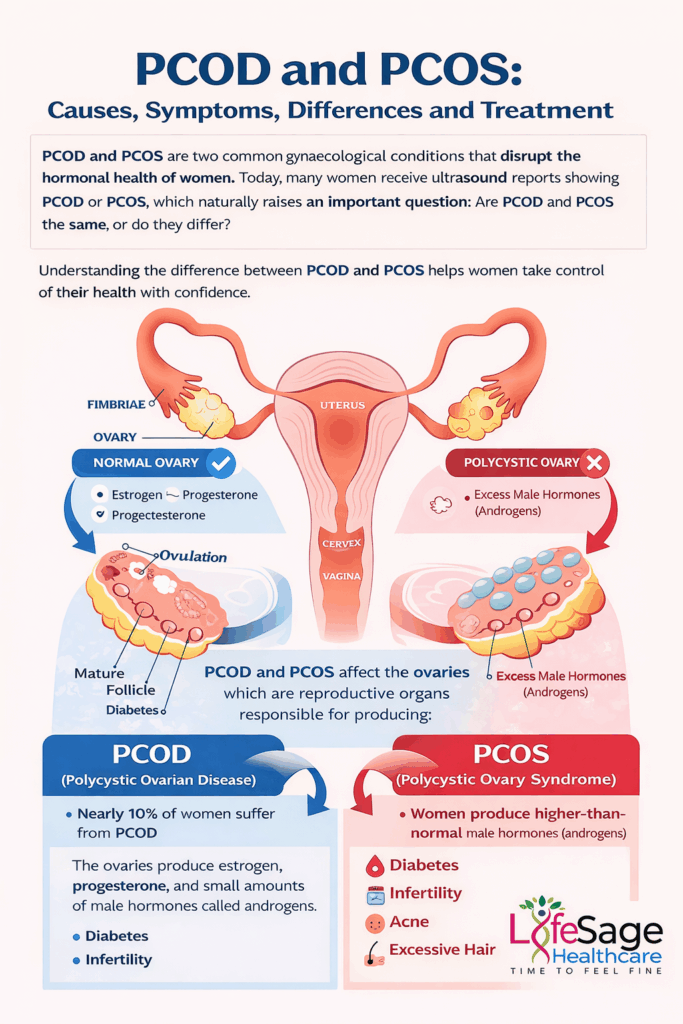
PCOD and PCOS are two common gynaecological conditions that disrupt the hormonal health of women. Today, many women receive ultrasound reports showing PCOD or PCOS, which naturally raises an important question: Are PCOD and PCOS the same, or do they differ?
When women understand the subtle yet important differences between PCOD and PCOS, they can take control of their health with greater confidence.
PCOD and PCOS affect the ovaries, which are reproductive organs responsible for producing estrogen and progesterone. These hormones regulate the menstrual cycle. The ovaries also produce small amounts of inhibin, relaxin, and male hormones called androgens. Nearly 10% of women worldwide suffer from PCOD. Compared to PCOD, women with PCOS produce higher-than-normal levels of male hormones. This hormonal imbalance causes irregular or missed menstrual periods and makes it difficult to conceive.
In addition to hormonal imbalance, PCOD and PCOS can trigger several health issues, including:
- Diabetes
- Infertility
- Acne
- Excessive hair growth
PCOD and PCOS are common conditions, but currently, no permanent cure exists. However, early diagnosis and proper management help control symptoms and prevent complications.
What Is PCOD?
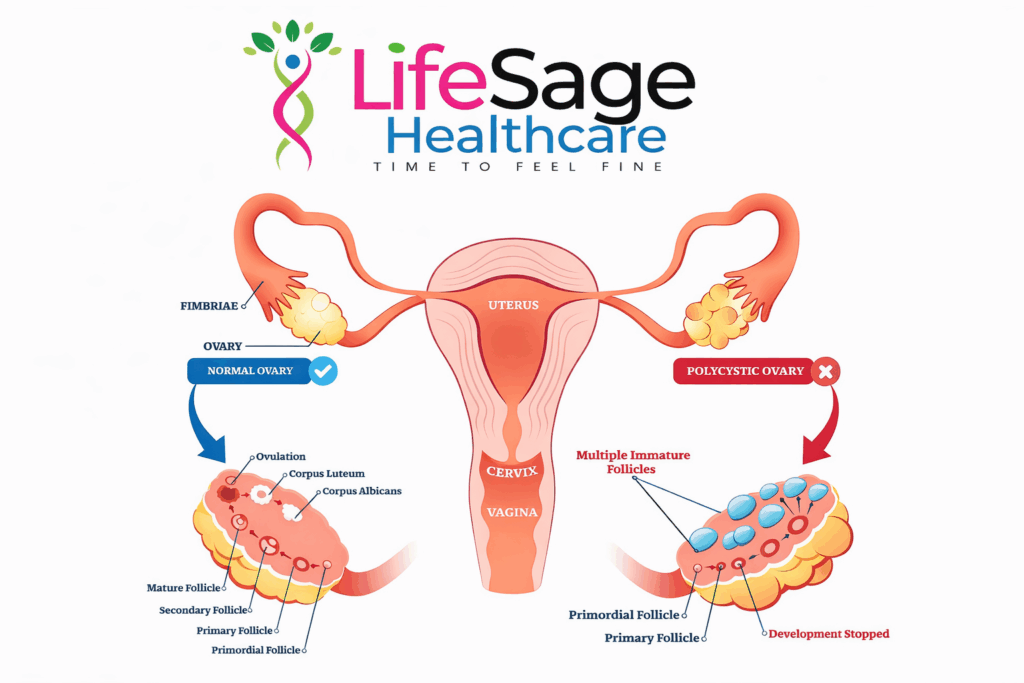
PCOD (Polycystic Ovarian Disease) is a medical condition in which a woman’s ovaries produce a large number of immature or partially mature eggs. Over time, these eggs develop into cysts inside the ovaries.
As a result, the ovaries enlarge and store excessive amounts of male hormones called androgens. This hormonal imbalance causes infertility, irregular menstrual cycles, hair loss, acne, and abnormal weight gain.
Women can effectively control PCOD through a healthy diet, regular exercise, and positive lifestyle changes.
What Is PCOS?
PCOS (Polycystic Ovary Syndrome) is a metabolic and hormonal disorder that affects women during their reproductive years, typically between the ages of 12 and 51. In PCOS, hormonal imbalance increases the level of male hormones (androgens) in the body.
Because of this increase, women may skip menstrual periods, experience irregular ovulation, and face difficulty in getting pregnant. PCOS also causes abnormal hair growth on the face and body. Over time, this condition increases the risk of serious health problems such as heart disease and diabetes.
PCOS is a serious medical condition and requires proper medical treatment and regular monitoring.
Common Features of PCOS and PCOD
Many women have PCOD or PCOS without knowing it. A group of symptoms directly affects ovulation and ovarian function, including:
- Ovarian cysts
- Increased levels of male hormones
- Skipped or irregular menstrual periods
Prevalence of PCOS in India
Only a few researchers have studied the prevalence of Polycystic Ovary Syndrome (PCOS) across different regions of India. Based on limited available data, PCOS prevalence in India ranges from 3.7% to 22.5%. Due to regional differences and insufficient data, experts find it difficult to determine the exact prevalence of PCOS in India.
Globally, 5% to 18% of women suffer from PCOS, and nearly 70% remain undiagnosed. Early identification of PCOD v/s PCOS plays a crucial role in managing the condition effectively and preventing fertility-related complications in the future.
Common Signs and Symptoms of PCOD and PCOS
Some women notice symptoms around the time of their first menstrual cycle, while others discover the condition after significant weight gain or difficulty in conceiving.
The most common signs and symptoms of PCOD and PCOS include:
- Irregular menstrual cycles (Oligomenorrhea)
- Skipped or absent periods (Amenorrhea)
- Heavy menstrual bleeding (Menorrhagia)
- Excessive hair growth on the face, body, back, abdomen, and chest
- Acne on the face, chest, and upper back
- Weight gain
- Hair thinning or hair loss from the scalp
- Darkened skin on the neck, groin, and underarms
Causes of PCOS (Polycystic Ovary Syndrome)
Doctors do not yet know the exact cause of PCOS, but several significant factors increase the risk of developing this condition.
1. Excess Insulin Production
When the body produces excess insulin, it increases androgen (male hormone) production. Higher androgen levels interfere with ovulation and cause irregular menstrual cycles.
2. Excess Androgen Production
The ovaries produce abnormally high levels of androgens. This hormonal imbalance leads to acne and hirsutism (excess hair growth on the face and body).
3. Low-Grade Inflammation
Recent studies show that women with PCOS often experience low-grade inflammation. This inflammation raises androgen levels and increases the risk of blood vessel damage and heart disease.
4. Hereditary Factors
PCOS often runs in families. Women with close relatives who have PCOS face a higher risk of developing the condition.
Complications of PCOD and PCOS
Many women worry about how PCOD or PCOS may affect their bodies. Elevated androgen levels can significantly impact overall health and require medical attention.
Common complications include:
- Abnormal uterine bleeding
- Infertility and pregnancy-related hypertension
- Preterm labor and premature birth
- Metabolic syndrome, including high blood sugar, high blood pressure, heart disease, diabetes, and stroke
- Non-alcoholic steatohepatitis (NASH)
- Depression and anxiety due to physical and emotional symptoms
- Sleep apnea, especially in overweight women, causing interrupted sleep
- Endometrial cancer due to thickened uterine lining
- Miscarriage
Frequently Asked Questions (FAQs) on PCOD and PCOS
1. Are PCOD and PCOS the same condition?
No, PCOD and PCOS are not the same. PCOD is a milder ovarian disorder caused by hormonal imbalance, while PCOS is a more serious metabolic syndrome that affects hormones, insulin levels, and long-term health.
2. Can women with PCOD or PCOS get pregnant?
Yes, many women with PCOD or PCOS can get pregnant. Proper lifestyle changes, weight management, and medical treatment help improve ovulation and fertility.
3. What is the main cause of PCOS?
PCOS develops due to insulin resistance, excess androgen production, genetic factors, and low-grade inflammation. These factors disrupt ovulation and menstrual cycles.
4. Is PCOD or PCOS curable?
There is no permanent cure for PCOD or PCOS. However, women can control symptoms effectively through diet, exercise, weight management, and medical treatment.
5. Does PCOS cause weight gain?
Yes, PCOS often causes weight gain due to insulin resistance and hormonal imbalance. Regular exercise and a healthy diet help manage weight.
6. Can PCOD or PCOS cause hair loss and acne?
Yes, increased male hormone levels in PCOD and PCOS cause acne, excessive facial and body hair growth, and hair thinning on the scalp.
Disclaimer : This content is for informational purposes only. Please consult a medical professional before taking any action.