
PCOS symptoms and treatment are important topics because Polycystic Ovary Syndrome (PCOS) is one of the most common hormonal disorders affecting people with a uterus. PCOS symptoms and treatment options vary from person to person, but early awareness helps manage hormonal imbalance, improve fertility, and reduce long-term health risks. Understanding PCOS symptoms and treatment allows individuals to take timely medical and lifestyle actions for better overall health.
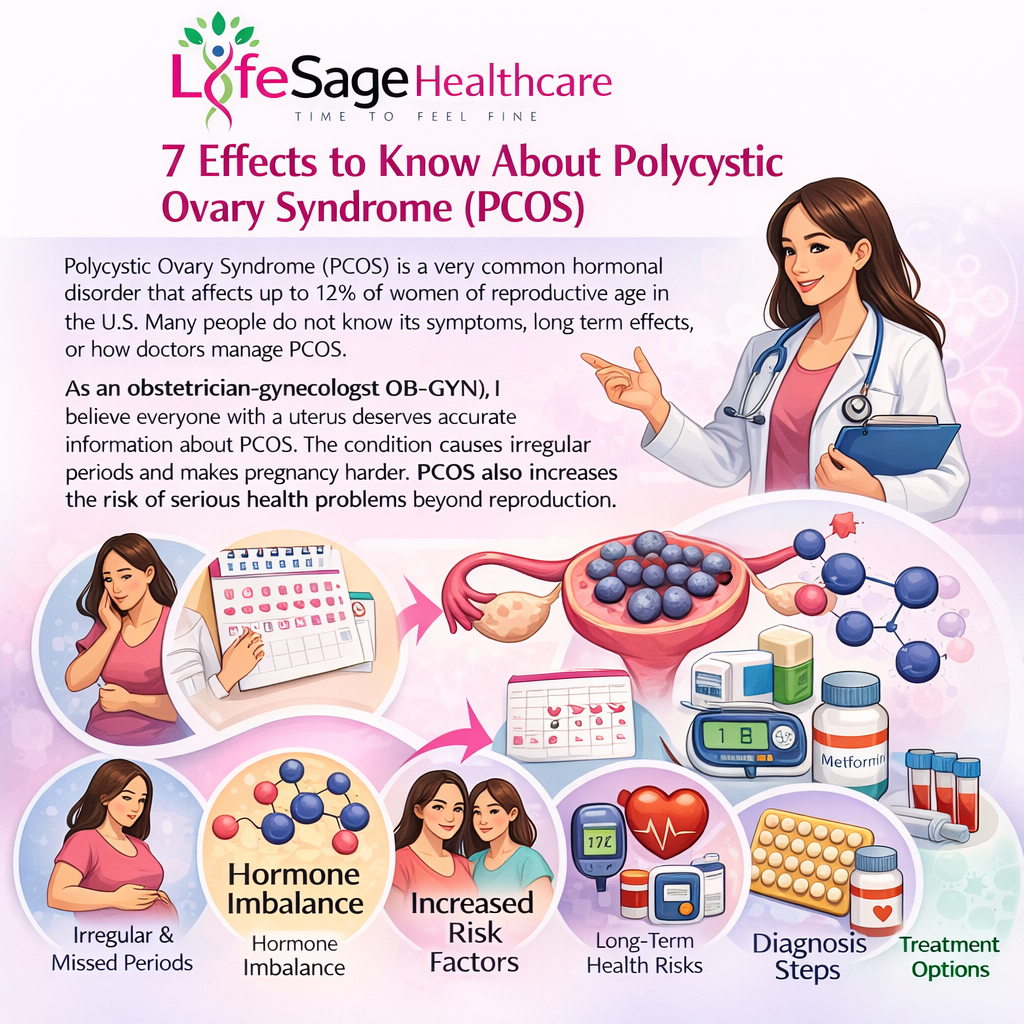
Polycystic Ovary Syndrome (PCOS) is a very common hormonal disorder that affects up to 12% of women of reproductive age in the U.S. Many people do not know its symptoms, long-term effects, or how doctors manage PCOS.
As an obstetrician-gynecologist (OB-GYN), I believe everyone with a uterus deserves accurate information about PCOS. The condition causes irregular periods and makes pregnancy harder. PCOS also increases the risk of serious health problems beyond reproduction.
These seven effects help you understand PCOS better.
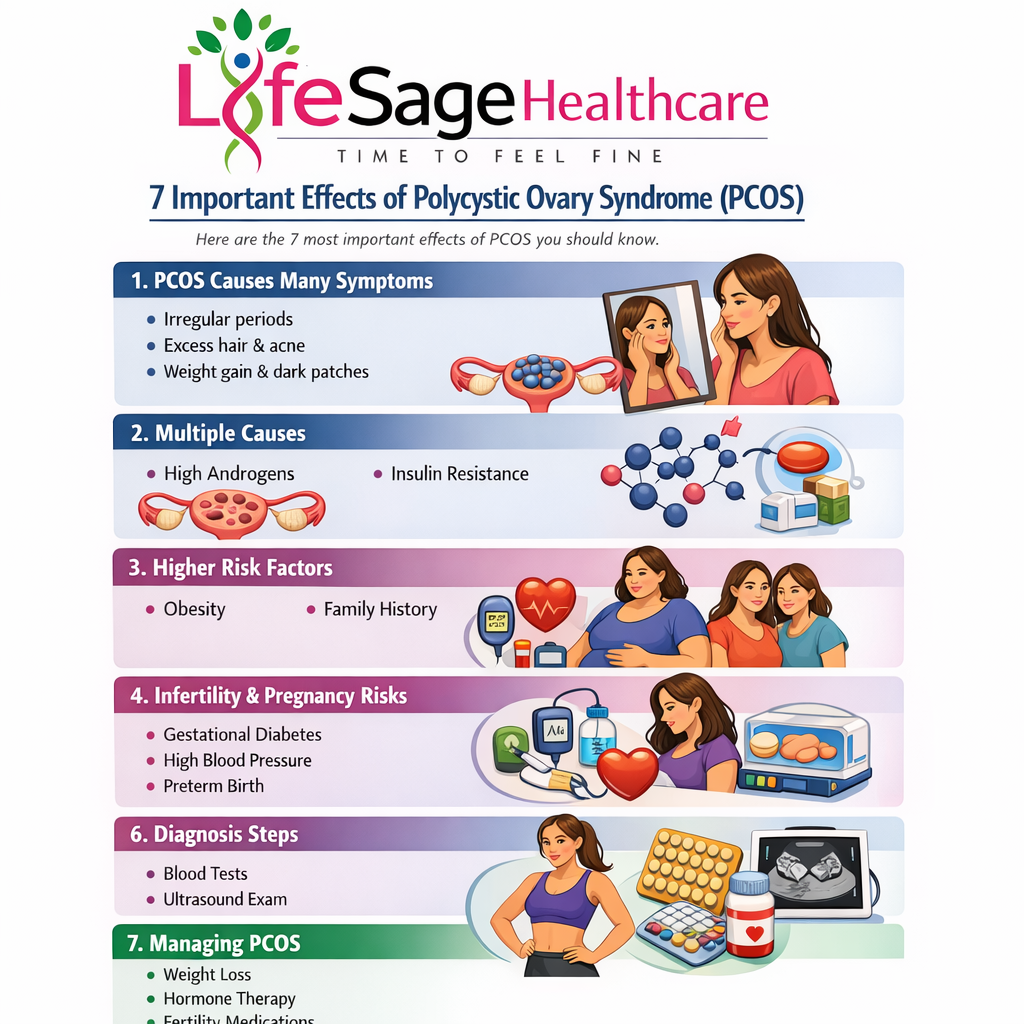
1. PCOS can cause a wide range of symptoms
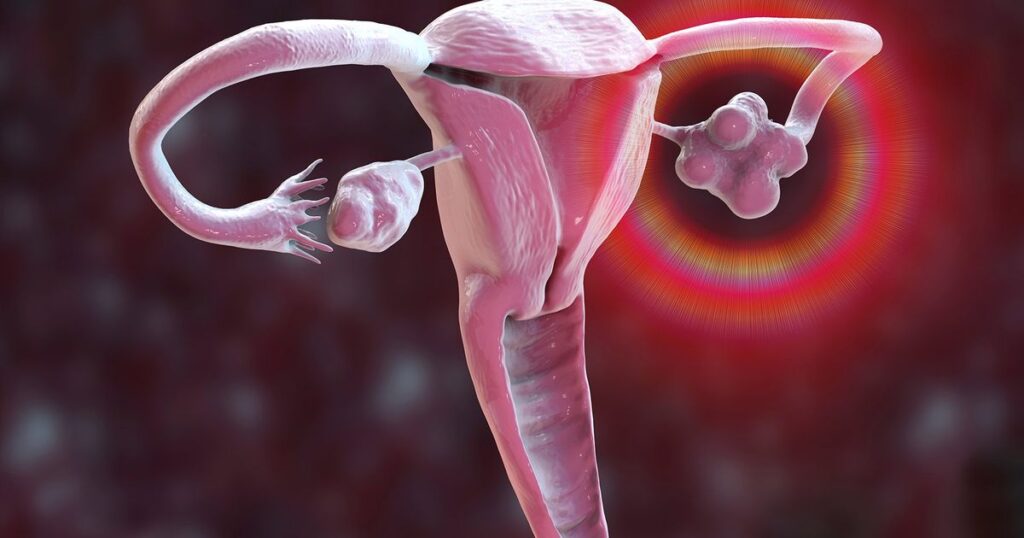
PCOS commonly causes irregular periods, light periods, missed periods, or unscheduled prolonged bleeding. The ovaries may appear enlarged or contain multiple cysts, which explains the term “polycystic.”
PCOS occurs when ovulation does not happen regularly and when androgen (male hormone) levels rise. These hormonal changes affect reproductive function and lead to several symptoms, including:
- Excess facial or body hair (face, chin, chest)
- Acne on the face, chest, and upper back
- Thinning hair or hair loss on the scalp
- Excess body weight
- Dark skin patches around the neck, groin, or under the breasts
- Skin tags in the armpits or neck
2. PCOS Develops From Multiple Causes
Doctors do not know the exact cause of PCOS, but they recognize two major contributors.
High Androgen Levels:
People with PCOS produce more male hormones than normal. These hormones block ovulation and cause acne and excess hair growth.
Insulin Resistance:
The pancreas produces insulin to convert food into energy. When the body resists insulin, blood sugar levels rise. The body then releases more insulin, which increases androgen levels and disrupts ovulation. Dark skin patches often signal insulin resistance.
3. Some People Face Higher Risk
PCOS can do in people with a uterus any time after puberty, and all races and races may be affected. But having redundant body weight or having a mama or family with PCOS may put someone advanced threat. It’s also most common to be diagnosed in their 20s or 30s, simply because that is when numerous cases see their croaker for problems with getting pregnant.
4. Many People With PCOS Experience Infertility
PCOS Symptoms and Treatment PCOS is the most common cause of anovulatory gravidity or fertility that stems from the absence of ovulation. The condition does not make it insolvable to get pregnant, however. Some of my cases with PCOS are suitable to conceive naturally, and numerous others are suitable to do so after making life changes or witnessing treatment.
I love celebrating these gravidity with my cases who have PCOS. But we also take time to bandy the possible complications that can do. People with PCOS are more likely to witness problems during their gravidity, including gravid diabetes, preeclampsia, gestation- convinced high blood pressure, preterm birth, or the need for a cesarean section. They are also more likely to misfire or have babies that need to spend time in the neonatal ferocious care unit( NICU).
But with collaboration and careful monitoring, there are way we can take to help have the healthiest gravidity possible.
5. PCOS can raise the threat of long- term health problems.
The goods of PCOS can be lifelong. Too important glucose and insulin in the blood, which occurs in further than half of people with PCOS, can increase the threat for type 2 diabetes and metabolic pattern. They may also be more likely to witness Obstructive sleep apnea. redundant body weight. Heart complaint and high blood pressure. Mood diseases, similar as depression or anxiety. Endometrial hyperplasia, when the endometrium — the filling of the uterus — becomes too thick which in turn can come endometrial cancer.
5. PCOS can raise the threat of long- term health problems.
The goods of PCOS can be lifelong. Too important glucose and insulin in the blood, which occurs in further than half of people with PCOS, can increase the threat for type 2 diabetes and metabolic pattern. They may also be more likely to witness Obstructive sleep apnea. redundant body weight. Heart complaint and high blood pressure. Mood diseases, similar as depression or anxiety. Endometrial hyperplasia, when the endometrium — the filling of the uterus — becomes too thick which in turn can come endometrial cancer.
6. Doctors Use Several Tests to Diagnose PCOS
I consider the possibility of PCOS when a case mentions that they are having trouble getting pregnant or are passing abnormal or missed ages. But these symptoms alone do not add up to a opinion. In fact, attesting a opinion generally involves multiple way, these include Complete health history, including menstrual history and family health history Physical test to look for skin changes, acne, or abnormal hair growth Blood test to check manly hormone situations, sugar situations, and other hormones that could beget abnormal menstrual cycles Pelvic ultrasound to look for excrescencies Once we have gathered all of this information, we can determine the right diagnosis.However, high androgen situations, and/ or excrescencies on their ovaries, If a case is passing irregular ages.
7. PCOS can be managed.
There is no cure for PCOS, but symptoms can be managed. life changes and treatments can go a long way toward managing symptoms, perfecting the chances for gestation, and reducing the threat for long- term complications.
I like to work with my cases to come up with individualized treatment plans. Together we’ll bandy options, including Losing redundant weight, if that’s demanded. For some, this may be enough to restore ovulation and make their ages more normal, adding the chance for gestation.
Physical exertion. Regular exercise is a known mood supporter. For cases who are passing depression, it really can make a difference. Gravidity treatments. specifics similar as Clomiphene and/ or Letrozole may restore ovulation and increase the chances of conceiving.
Hormonal contraceptives. For people with a uterus who do not want to come pregnant, hormonal birth control can make their ages more regular. Insulin- sensitizing agents. medicines like Metformin can reduce insulin resistance and address a number of PCOS symptoms, including redundant weight, high cholesterol, and irregular ages.
Anti-androgen drugs. These medicines help the body from making androgen hormones or limit the goods of androgens, like inordinate hair growth.
Disclaimer : This content is for informational purposes only. Please consult a medical professional before taking any action.
Frequently Asked Questions (FAQs) About PCOS
1. What is PCOS?
PCOS (Polycystic Ovary Syndrome) is a hormonal condition that affects how the ovaries work. It often causes irregular periods, high androgen levels, and difficulty with ovulation
2. What are the common symptoms of PCOS?
PCOS can cause irregular or missed periods, acne, excess facial or body hair, weight gain, hair thinning on the scalp, dark skin patches, and difficulty getting pregnant.
3. What causes PCOS?
Doctors do not know the exact cause of PCOS. However, hormonal imbalance, high androgen levels, insulin resistance, genetics, and lifestyle factors play a major role.
4. Who can develop PCOS?
Any person with a uterus can develop PCOS after puberty. PCOS affects people of all races and ethnicities. A family history of PCOS and excess body weight increase the risk.
5. Can PCOS affect fertility?
Yes, PCOS can affect fertility because it may prevent regular ovulation. However, many people with PCOS conceive naturally or with lifestyle changes and medical treatment.