
Contractions are a normal part of childbirth, but before “real” labor starts, you may experience “false” labor contractions, also known as Braxton Hicks contractions. While contractions of any kind are never pleasant, Braxton Hicks contractions are generally harmless (discomfort only). They simply show that your body is warming up for birth.
Figuring out whether you are going into real labor can feel confusing, especially during your first pregnancy. You might think the baby is about to arrive, only for doctors or nurses to tell you that you are not in active labor yet. So what exactly is happening? Below, experts explain everything you need to know about Braxton Hicks contractions—from what they are to how to find relief.

What Are Braxton Hicks Contractions?
Braxton Hicks contractions are irregular contractions that come and go before true labor begins. Your uterus works like a muscle, and anything that irritates it can cause it to contract, explains Dr. Jessica Shepherd, adjunct professor of clinical obstetrics and gynecology at the University of Illinois College of Medicine, Chicago.
Some experts believe that Braxton Hicks contractions help tone the uterine muscles and prepare the cervix for childbirth. Think of them as practice contractions for the real labor.
false labor contractions are common, but not everyone feels them. These contractions may remain so mild that some women do not even realize they are having them, says Dr. Sherry A. Ross, women’s health expert and author of She-ology: The Definitive Guide to Women’s Intimate Health. As with most pregnancy experiences, every person feels labor and pain differently. For some women, Braxton Hicks contractions feel noticeably uncomfortable.
Even when they cause discomfort, these contractions do not trigger real labor, explains Dr. Christine Greves, OB-GYN at the Winnie Palmer Hospital for Women & Babies in Orlando, Florida. True labor contractions cause changes in the cervix that prepare the body for delivery. pregnancy practice pains only create confusion and discomfort. Many people refer to them as “false labor” because they can feel very similar to true labor contractions, adds Dr. Meleen Chuang, medical director of women’s health at NYU Langone.
You may wonder what false contractions actually feel like. According to the American Pregnancy Association (APA), Braxton Hicks contractions usually feel like an uncomfortable tightening that starts at the top of the uterus and moves downward.
Dr. Greves explains that these contractions often make the uterus feel like a very tight basketball. The sensation may feel strange at first, particularly if you have never experienced labor before.
Are uterine tightening Painful?
Every woman experiences these contractions differently. Some women feel only mild discomfort, similar to light menstrual cramps. Others may feel noticeable pain. Dr. Shepherd says that Braxton Hicks contractions can range anywhere from mild discomfort to moderate pain.
Where Do You Feel Braxton Hicks?
Most women feel mild pregnancy contractions toward the front of the abdomen, much like menstrual cramps. According to Cleveland Clinic, these contractions usually do not concentrate in the lower back like real labor contractions often do.
When Do Braxton Hicks Contractions Start?
You can experience mild pregnancy contractions at any point during pregnancy. The American Pregnancy Association notes that they may begin as early as the second trimester, but they occur most often in the third trimester, especially toward the end of the pregnancy. Many women notice them more frequently in the evening.
How Long Do Braxton Hicks Contractions Last?
The length of each contraction varies from person to person. Dr. Chuang explains that each contraction usually lasts between 15 and 30 seconds, though some may continue for up to two minutes. These contractions often appear for a short time, remain irregular, and then slowly fade away.
What Causes Braxton Hicks Contractions?
Dehydration
Dehydration is one of the most common causes. Dr. Greves explains that the part of the brain that controls thirst sits close to the part that triggers uterine contractions. When you feel thirsty, that area may also stimulate contractions. Dehydration also makes muscle cramps more likely, including cramps in the uterus, Dr. Shepherd adds.
Urinary Tract Infection (UTI)
Urinary tract infections can trigger mild pregnancy contractions. Once doctors treat the infection, the contractions usually stop.
Too Much Physical Activity
Standing for long periods, walking too much, or pushing your body too hard can start these contractions. If contractions begin after activity, Dr. Greves advises resting for a while to see if they go away.
Sexual Intercourse
Some women notice practice pains in pregnancy during or after sex. Orgasms release oxytocin, a hormone that causes muscle contractions. Physical activity during intercourse can also stimulate the uterus. These contractions typically remain mild and fade quickly.
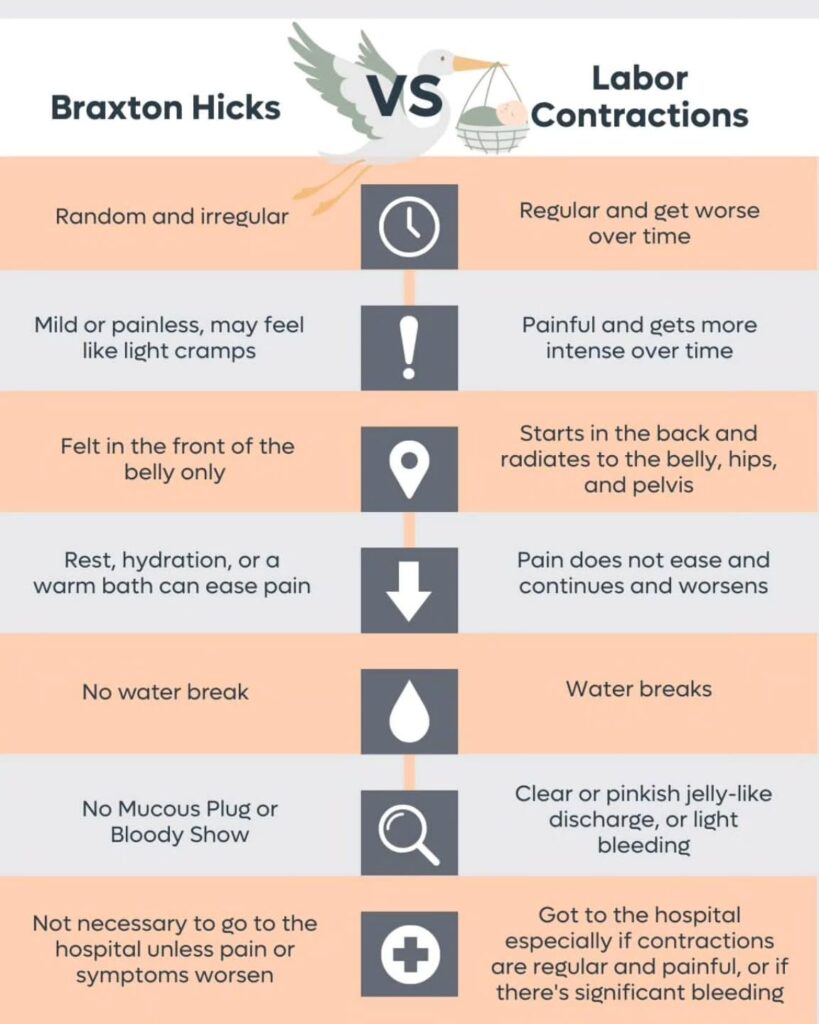
Braxton Hicks vs. Real Contractions
The key difference betweenpainless uterine contractions and real labor contractions is simple:
Braxton Hicks do not lead to labor, while real labor contractions prepare your body for childbirth and cause the cervix to dilate.
Difference between Braxton Hicks and labor condensation ?
practice pains in pregnancy FAQs
Can irregular pregnancy contractions Mean Labor Is Coming Soon?
mild pregnancy contractions alone do not mean that labor will start soon. Dr. Chuang explains that although these contractions may increase as the due date approaches, they do not reliably predict the start of labor. If you feel unsure or concerned, always consult your healthcare provider.
Does the Baby Move During preparatory uterine contractions?
Yes, babies can move during Braxton Hicks contractions. Dr. Chuang explains that these contractions may cause the baby to shift inside the womb. However, baby movements during Braxton Hicks contractions usually feel less intense than during active labor.
Disclaimer : This content is for informational purposes only. Please consult a medical professional before taking any action.