

Sleep Diseases
Sleep diseases and disorders are medical conditions that affect how well you sleep, when you sleep, and how refreshed you feel in the morning. Millions of people suffer from sleep diseases and disorders such as insomnia, sleep apnea, restless legs syndrome, and narcolepsy, yet many remain undiagnosed. Understanding sleep diseases and disorders is the first step toward improving your sleep quality and protecting your long-term health
The most common sleep diseases and disorders include insomnia, obstructive sleep apnea, and narcolepsy. Untreated sleep diseases and disorders can increase your risk of heart disease and depression.
What Are Sleep Diseases?
Sleep diseases are conditions that interfere with your ability to get enough restful sleep and maintain healthy sleep patterns. There are more than 80 different sleep diseases, and they affect:
- How well you sleep (quality)
- When you fall asleep and whether you stay asleep (timing)
- How much sleep you get (quantity or duration)
Everyone experiences sleep problems occasionally. However, you may have a sleep disorder if:
- You regularly have trouble sleeping
- You feel tired during the day even after sleeping at least seven hours the night before
- It becomes difficult to perform normal daily activities
What Are the Major Categories of Sleep Diseases?
The classification of sleep diseases has changed several times over the years. The International Classification of Sleep Disorders (ICSD) currently groups sleep diseases based on symptoms, how they affect the body (pathophysiology), and the body systems involved.
The most recent update, ICSD-3R, includes the following categories:
- Insomnia – Difficulty falling asleep or staying asleep
- Sleep-related breathing disorders – Breathing problems that occur during sleep
- Central disorders of hypersomnolence – Difficulty staying awake or feeling alert during the day
- Circadian rhythm sleep-wake disorders – Problems caused by an internal body clock that disrupts sleep and wake times
- Parasomnias – Unusual physical behaviors or verbal expressions during sleep, such as sleepwalking or sleep talking
- Sleep-related movement disorders – Repetitive movements or urges to move that interfere with sleep
The ICSD is updated regularly to include the latest research and information about sleep diseases.
How Much Sleep Do I Need?
Sleep is essential for overall health and proper body function. While sleep needs vary from person to person, experts recommend that adults get seven to nine hours of sleep per night. Sleep requirements vary by age, with children and teenagers generally needing more sleep than adults.
How Common Are Sleep Diseases?
More than 50 million people in the United States have a sleep disorder. Additionally, over 100 million Americans of all ages report not getting enough sleep on a regular basis.
Symptoms and Causes
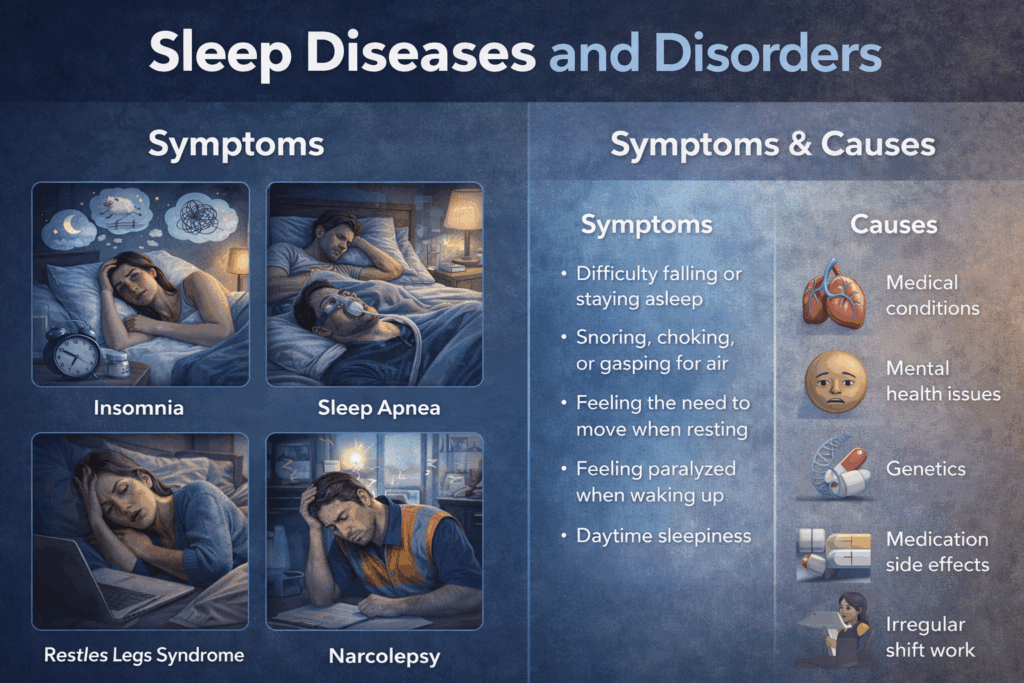
What are the symptoms of sleep diseases?
- Symptoms of common sleep diseases vary grounded on the type, but could include
- Difficulty falling asleep or it takes further than 30 twinkles to fall asleep regularly.
- Trouble staying asleep through the night or you wake up frequently in the middle of the night and can’t fall back asleep.
- Snoring, heaving or choking happens during sleep.
- Feeling like you need to move when you relax. Movement relieves this feeling.
- Feeling like you can’t move when you wake up.
During the day, you may witness fresh signs and symptoms caused by a lack of acceptable sleep, including
- Day somnolence, taking frequent day naps or falling asleep while doing routine tasks
- Behavioral changes like difficulty fastening or paying attention
- Mood changes like perversity and trouble managing your feelings
- Difficulty meeting deadlines or performance prospects during academy or work
- Frequent accidents or falls
still, talk to a healthcare provider, If you feel like you’re not suitable to get a good night’s rest or have symptoms that intrude with your day conditioning.
What Causes Sleep Diseases?
Sleep diseases occur when the body’s normal sleep–wake cycle becomes disrupted. Several factors can cause this disruption, and the cause often depends on the specific type of sleep disorder. Common causes include:
- Symptoms of medical conditions such as heart disease, asthma, chronic pain, or neurological disorders
- Symptoms of mental health conditions like depression or anxiety
- Genetic factors or inherited mutations
- Side effects of certain medications
- Working night shifts or irregular work schedules
- Substance use before bedtime, including caffeine or alcohol
- Low levels of specific brain chemicals or minerals
- Unknown causes in some cases
What Are the Risk Factors for Sleep Diseases?
You may face a higher risk of developing a sleep disease if you:
- Have an existing medical condition
- Experience high levels of stress
- Work late or rotating shifts
- Have a family history of sleep diseases
Research shows that women experience sleep diseases more often than men. Additionally, nearly half of all adults over the age of 65 have some form of sleep disorder.
What Happens If I Don’t Get Enough Sleep?
Lack of adequate sleep affects more than just your energy levels. When you do not get the quality or quantity of sleep your body needs, you may experience:
- Difficulty learning, remembering information, or making decisions
- Personality changes, including irritability
- Slower reaction times, increasing the risk of accidents
Long-term sleep deprivation can also contribute to serious health conditions, including:
- Depression
- Obesity
- Heart disease
- Dementia
Although rare, some sleep diseases can be life-threatening if left untreated.
Diagnosis and Tests
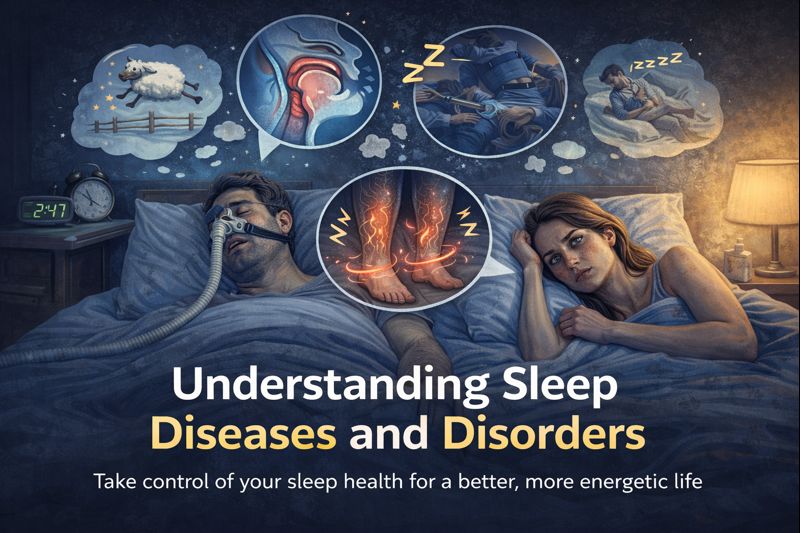
How are sleep disorders diagnosed ?
A healthcare provider diagnoses sleep diseases through a physical examination, symptom review, and diagnostic testing. Tests may include blood tests or imaging studies to identify underlying causes.
Your provider may ask you to maintain a sleep journal to track your sleeping habits. In this journal, you should record:
- The time you go to bed
- The estimated time you fall asleep
- The time you wake up
- Any daytime naps
- How you feel before and after sleeping
Keeping a pen and paper near your bed can help you record details accurately. Since it can be difficult to know the exact moment you fall asleep, estimating the time is acceptable.
Some people use smartwatches or wearable devices called actigraphs to monitor sleep and activity cycles. These devices help confirm sleep and wake times.
Your primary care provider may also refer you to a sleep specialist for a sleep study (polysomnogram). During this test, medical professionals electronically record brain activity, breathing patterns, heart rate, and body movements while you sleep. A healthcare provider analyzes the results to determine whether a sleep disorder is present.
What Questions Will Your Healthcare Provider Ask During a Sleep Test?
During a sleep assessment, your healthcare provider asks specific questions to understand your sleep habits, lifestyle, and possible sleep disorders.
Questions About Your Sleep
- How many hours do you sleep each night?
- Do you toss and turn while sleeping?
- How long does it take you to fall asleep?
- Do you wake up during the night?
- Do you feel rested when you wake up?
Questions About Your Daytime Routine
- Do you take naps during the day?
- How sleepy do you feel during the daytime?
- Do you struggle to stay alert at work, school, or while driving?
Questions About Work and Lifestyle
- Do you work night shifts or rotating shifts?
- Has your work or study schedule changed your sleep routine?
- Do you use mobile phones or screens before bedtime?
Questions About Breathing During Sleep
- Do you snore loudly?
- Has anyone noticed pauses in your breathing while you sleep?
- Do you wake up gasping or choking at night?
Do You Need to See a Sleep Specialist?
Your healthcare provider may refer you to a sleep specialist if they notice signs of a sleep disorder. A sleep specialist focuses on diagnosing and treating conditions that affect sleep and overall health.
Treatment and Management
How are sleep diseases treated ?
Healthcare providers treat sleep diseases using several approaches, depending on the type and severity of the condition. Common treatment options include:
- Improving sleep habits to maintain a consistent sleep schedule and healthy sleep hygiene
- Participating in cognitive behavioral therapy (CBT) to address thoughts and behaviors that interfere with sleep
- Taking medications such as sleep aids or wake-promoting agents, or using supplements like melatonin
- Adjusting medications that cause excessive daytime sleepiness (do not stop or change any medication without medical approval)
- Using a CPAP (continuous positive airway pressure) machine or receiving an implanted neurostimulator to manage sleep apnea
- Using light therapy to regulate sleep-wake cycles
Your healthcare provider will recommend a treatment plan based on your specific condition and overall health. They will also explain possible side effects before starting treatment.
What Medications Treat Sleep Diseases?
Healthcare providers may prescribe the following medications or supplements to treat common sleep diseases:
- Insomnia: Sleep aids such as melatonin, zolpidem, zaleplon, eszopiclone, ramelteon, suvorexant, lemborexant, or doxepin
- Restless legs syndrome: Medications such as gabapentin, gabapentin enacarbil, or pregabalin
- Excessive daytime sleepiness and wake-promoting agents: Medications such as modafinil, armodafinil, pitolisant, mixed amphetamine salts, sodium oxybate, or solriamfetol
How Can I Get Better Sleep?
Healthcare providers often recommend improving sleep hygiene to help you sleep better. Sleep hygiene focuses on creating a routine and environment that support restful sleep.
You can improve your sleep by:
Creating a Comfortable Sleep Environment
Keep your bedroom cool, quiet, and dark. If noise disrupts your sleep, use white noise or earplugs. If light interferes, use a sleep mask or blackout curtains.
Managing Stress Before Bed
Reduce stress before bedtime by writing down tasks or worries earlier in the evening. This habit helps prevent overthinking at night. Try to maintain a positive mindset rather than worrying about the effects of poor sleep.
Using Your Bed Only for Sleep
Avoid watching television, using your phone, eating, or working in bed. Reserve your bed for sleep and intimate activities only.
Establishing a Consistent Bedtime Routine
Create calming habits before bed, such as taking a warm bath, listening to soothing music, or reading. Practice relaxation techniques or meditation. Wake up at the same time every morning, including weekends and holidays.
Avoiding Clock-Watching
Turn clocks away from view and place your phone face down. Use it only as an alarm. If you cannot fall asleep within 20 minutes, leave the bedroom and engage in a relaxing activity without screens until you feel sleepy.
Exercising Regularly
Exercise regularly to support healthy sleep, but avoid exercising within four hours of bedtime if you struggle to fall asleep. Avoid intense workouts close to bedtime.
Frequently Asked Questions (FAQs)
1. What are the early signs of a sleep disease?
Sleep diseases often begin with difficulty falling asleep, frequent nighttime awakenings, loud snoring, or excessive daytime sleepiness. Many people also experience poor concentration, mood changes, or fatigue even after getting enough hours of sleep.
2. Can sleep diseases affect mental and physical health?
Yes. Sleep diseases directly affect mental health, emotional balance, and physical well-being. Untreated sleep disorders increase the risk of depression, anxiety, heart disease, obesity, and poor daytime performance.
3. How do healthcare providers diagnose sleep diseases?
Healthcare providers diagnose sleep diseases by reviewing symptoms, performing physical examinations, and ordering tests such as sleep studies, blood tests, or imaging. They may also ask patients to maintain a sleep journal or use wearable sleep-tracking devices.
4. Are sleep diseases treatable?
Yes. Healthcare providers successfully treat most sleep diseases using lifestyle changes, sleep hygiene improvements, therapy, medications, medical devices like CPAP machines, or light therapy. Treatment depends on the type and severity of the condition.
5. When should I see a healthcare provider for sleep problems?
You should see a healthcare provider if you regularly struggle to sleep, feel tired despite adequate rest, snore loudly, stop breathing during sleep, or experience sleepiness that interferes with daily activities, work, or driving.