
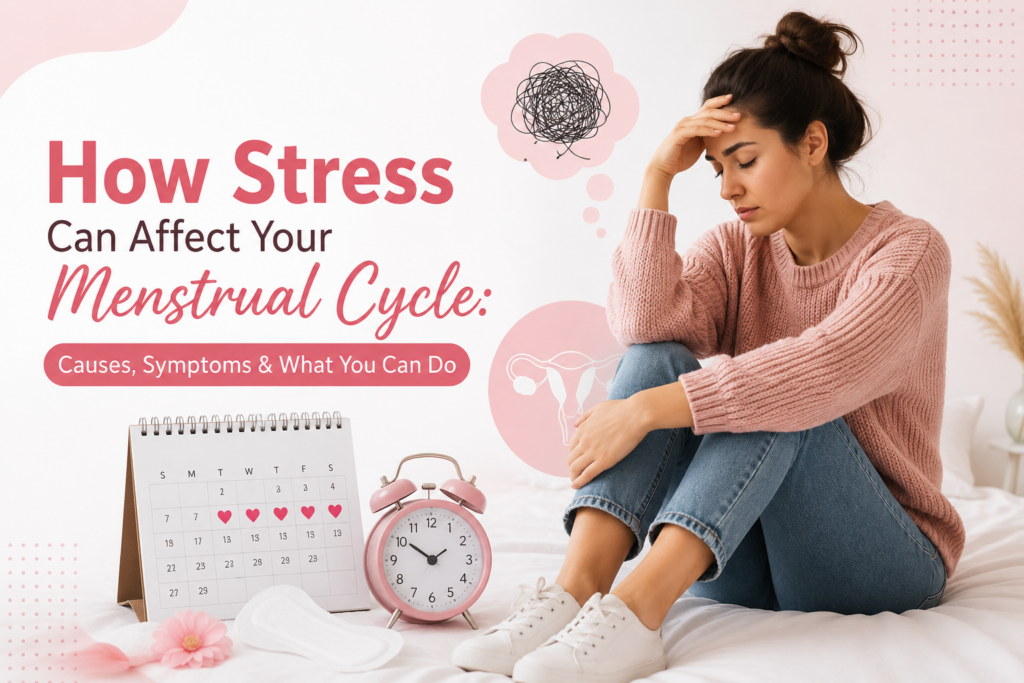
Stress is a common part of everyday life. Work pressure, studies, relationship concerns, financial worries, lack of sleep, and major life changes can all contribute to stress. While occasional stress is a normal part of life, ongoing or intense stress can affect your physical health as well as your emotional well-being.
One area that may be affected is your menstrual cycle. The connection between stress and menstrual cycle changes can sometimes result in late periods, irregular periods, changes in menstrual flow, or increased PMS symptoms.
If you have noticed that your period has suddenly become different during a particularly stressful time, there may be a connection. However, stress is not the only possible cause of menstrual changes, so persistent symptoms should always be evaluated by a healthcare professional.
Can Stress Affect Your Period?
Yes, stress can affect your menstrual cycle. When you experience significant stress, your body responds by releasing stress hormones such as cortisol and adrenaline. These hormones are part of the body’s natural stress response and can influence the hormonal signals involved in reproduction.
The menstrual cycle depends on communication between the brain, ovaries, and reproductive hormones. When stress affects these signals, ovulation may happen later than usual or may not occur in a particular cycle.
As a result, you may notice:
- A late period
- An early period
- Irregular periods
- A missed period
- Changes in menstrual flow
- Increased PMS symptoms
- Changes in period-related pain or discomfort
Not everyone experiences these changes in the same way. Some people may notice only a small change in their cycle, while others may experience more noticeable irregularities.
How Does Stress Affect the Menstrual Cycle?
Stress can affect your menstrual cycle in several ways. The impact may depend on how intense the stress is, how long it continues, and how your body responds to it.
1. Stress May Cause a Late Period
One of the most commonly searched questions is: “Can stress delay your period?”
Yes. Significant or prolonged stress may interfere with the hormonal signals involved in ovulation. If ovulation happens later than usual, your period may also arrive later.
For example, if you usually have a predictable menstrual cycle but experience a particularly stressful month, you may notice that your period arrives several days later than expected.
A single late period does not necessarily indicate a serious problem. However, repeated delays should not automatically be attributed to stress.
If pregnancy is possible, it is also important to consider a pregnancy test rather than assuming stress is the reason for a missed or delayed period.
2. Stress Can Contribute to Irregular Periods
Chronic or intense stress may contribute to an irregular menstrual cycle.
You may notice that:
- Your period arrives earlier than expected
- Your period arrives later than expected
- The number of days between periods changes
- You occasionally miss a period
- Your cycle becomes less predictable
Stress is one possible explanation, but irregular periods can also be associated with conditions such as PCOS, thyroid disorders, significant weight changes, excessive exercise, certain medications, or other hormonal changes.
If irregular periods continue for several cycles, it is important to discuss them with a healthcare professional.
3. Stress May Change Menstrual Flow
Some people may notice changes in their menstrual flow during stressful periods. Your bleeding may appear lighter or heavier than your usual pattern.
However, unusually heavy bleeding should not automatically be blamed on stress.
If you are soaking through menstrual products very frequently, passing unusually large blood clots, bleeding for longer than usual, or feeling weak or dizzy because of blood loss, seek medical advice.
4. Stress May Increase PMS Symptoms
Stress can also make some PMS (premenstrual syndrome) symptoms feel more difficult to manage.
Common PMS symptoms include:
- Mood changes
- Irritability
- Fatigue
- Headaches
- Bloating
- Food cravings
- Breast tenderness
- Difficulty sleeping
- Difficulty concentrating
Stress and PMS can sometimes create a cycle in which one makes the other feel more difficult. For example, poor sleep and emotional stress may make you feel more tired or irritable around your period.
Why Does Stress Delay Ovulation?
Your menstrual cycle is controlled by a complex interaction between the brain, ovaries, and reproductive hormones.
When the body experiences significant or prolonged stress, changes in stress hormones can affect the hormonal signals involved in ovulation. If these signals are disrupted, ovulation may be delayed or may not happen during a particular cycle.
Since menstruation usually occurs after ovulation, a change in the timing of ovulation can also change the timing of your period.
This is one reason why stress and irregular periods can sometimes be connected.
However, menstrual cycles naturally vary, and stress is not the explanation for every irregular or delayed period.
Can Anxiety Cause Irregular Periods?
Anxiety and prolonged emotional stress can place additional strain on the body. In some people, this may contribute to changes in the menstrual cycle.
However, anxiety is not the only possible cause of irregular periods.
Other possible factors include:
- Polycystic ovary syndrome (PCOS)
- Thyroid disorders
- Significant weight gain or weight loss
- Excessive physical exercise
- Certain medications
- Hormonal changes
- Pregnancy
- Perimenopause
- Certain reproductive health conditions
Therefore, persistent menstrual changes should be assessed rather than automatically assumed to be caused by stress.
Can Stress Stop Your Period?
Severe or prolonged stress can sometimes contribute to a missed period. When stress significantly affects the hormonal signals responsible for ovulation, ovulation may be delayed or may not occur.
However, a missed period can have many causes. Pregnancy, hormonal conditions, significant changes in body weight, excessive exercise, and certain medical conditions can also affect menstruation.
If you frequently miss periods or go for long periods without menstruation, speak with a healthcare professional to identify the underlying cause.
How to Manage Stress for Better Menstrual Health
Managing everyday stress can support your overall physical and emotional well-being. While stress management cannot guarantee a regular menstrual cycle, healthy habits may help your body cope better with stress.
Get Enough Sleep
Aim for consistent, good-quality sleep. Poor or irregular sleep can contribute to increased stress and fatigue.
Try to maintain a regular bedtime and create a relaxing routine before sleeping.
Stay Physically Active
Regular physical activity can support overall physical and mental well-being. Walking, stretching, yoga, swimming, or other activities you enjoy can be good options.
Choose an activity that feels comfortable and sustainable rather than pushing your body excessively.
Practice Relaxation Techniques
Relaxation techniques may help reduce everyday stress.
You can try:
- Deep breathing exercises
- Meditation
- Yoga
- Gentle stretching
- Journaling
- Spending time outdoors
- Taking short breaks from work or screens
Even a few minutes of relaxation during a busy day may help you feel calmer.
Eat a Balanced Diet
Regular, nutritious meals provide your body with the energy and nutrients it needs.
Include a variety of fruits, vegetables, whole grains, protein sources, and healthy fats in your diet. Avoid regularly skipping meals, especially during stressful periods.
Stay Hydrated
Drinking enough water is important for overall health. Keep yourself hydrated throughout the day and pay attention to your body’sp needs, particularly during menstruation.
Make Time for Yourself
Constant work, studies, responsibilities, and screen time can leave little room for relaxation. Making time for hobbies, social connections, entertainment, or other activities you enjoy can help you manage everyday stress.
Track Your Menstrual Cycle
Using a period-tracking app or calendar can help you understand your menstrual pattern.
You can record:
- Period start and end dates
- Changes in menstrual flow
- PMS symptoms
- Period pain
- Mood changes
- Major stressful events
- Sleep patterns
Tracking your cycle can help you identify patterns and provide useful information when speaking with a healthcare professional.
When Should You See a Doctor?
Stress can affect your menstrual cycle, but not every period change is caused by stress.
Consider consulting a gynecologist or healthcare professional if:
- Your periods remain irregular for several cycles
- You frequently miss periods
- Your periods suddenly become much heavier
- Your period lasts longer than usual
- You experience severe menstrual pain
- You have bleeding between periods
- You experience unusual symptoms along with menstrual changes
- You feel unusually weak, dizzy, or tired
- Pregnancy is possible and your period is late or missed
- Changes in your menstrual cycle are affecting your daily life
A healthcare professional can review your symptoms, medical history, and menstrual pattern and recommend appropriate tests or treatment if necessary.
Frequently Asked Questions About Stress and Periods
Can stress delay your period?
Yes. Significant stress can interfere with the hormonal processes involved in ovulation, which may cause your period to arrive later than expected.
Can stress make your period early?
Stress may contribute to changes in menstrual timing, although there are many possible reasons for an early period. If your periods repeatedly arrive earlier than expected, consult a healthcare professional.
Can stress stop your period?
Severe or prolonged stress can sometimes contribute to missed periods. However, pregnancy and other medical or hormonal conditions should also be considered.
How long can stress affect your menstrual cycle?
The effect varies from person to person. A temporary stressful period may cause a short-term change, while ongoing stress may contribute to repeated cycle irregularities.
Can stress cause period pain?
Stress does not necessarily directly cause menstrual cramps, but it may make some people more sensitive to pain or make existing PMS and period symptoms feel more difficult to manage.
Can lack of sleep affect your period?
Poor sleep can contribute to physical and emotional stress, which may influence overall hormonal health. Maintaining a regular and healthy sleep routine can support general well-being.
Should I worry about one irregular period?
One unusual cycle does not necessarily mean that something is wrong. Menstrual cycles can naturally vary. However, if irregularity continues, becomes severe, or occurs along with other concerning symptoms, consult a healthcare professional.
Final Thoughts
The connection between stress and menstrual cycles is real, but it is not always straightforward. Significant or prolonged stress may affect the hormonal signals involved in ovulation and contribute to delayed, missed, or irregular periods.
Taking care of your sleep, nutrition, physical activity, hydration, and stress levels can support your overall well-being. Tracking your menstrual cycle can also help you understand your personal pattern and notice changes early.
At the same time, persistent or unusual menstrual changes should not automatically be blamed on stress. Conditions such as PCOS, thyroid disorders, pregnancy, hormonal changes, and other health concerns can also affect your period.
If your menstrual cycle has changed significantly, your periods are repeatedly irregular, or you are concerned about your symptoms, speak with a qualified healthcare professional for appropriate guidance.
Understanding your menstrual cycle is an important part of taking care of your overall health.