
Every month, many women experience changes in their body, mood, energy levels, and appetite in the days leading up to their period. Bloating, breast tenderness, headaches, food cravings, irritability, fatigue, and mood changes are commonly associated with the premenstrual phase.
For some women, these symptoms are mild and temporary. But for others, the symptoms can become intense enough to interfere with work, studies, relationships, social activities, or everyday routines.
This is where understanding the difference between PMS (Premenstrual Syndrome) and PMDD (Premenstrual Dysphoric Disorder) becomes important.
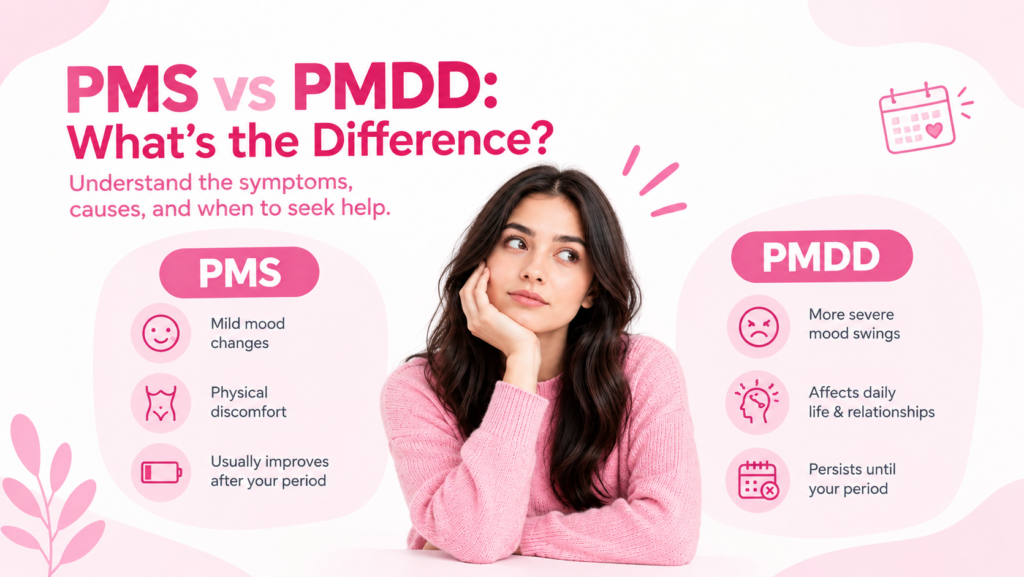
Although PMS and PMDD can have overlapping symptoms, they are not the same condition. PMDD is a more severe condition in which emotional and physical symptoms can have a significant impact on daily functioning.
What Is PMS?
PMS, or Premenstrual Syndrome, refers to a combination of physical and emotional symptoms that occur before menstruation.
Symptoms usually appear during the days or weeks before a period and often improve once menstruation begins or shortly afterward.
PMS can affect different people in different ways. Some may experience mainly physical symptoms, while others may notice more emotional or behavioral changes.
Common Symptoms of PMS
Physical symptoms may include:
- Bloating or water retention
- Breast tenderness
- Headaches
- Abdominal cramps
- Fatigue
- Backache
- Changes in appetite
- Food cravings
- Acne or skin changes
- Sleep changes
Emotional and behavioral symptoms may include:
- Irritability
- Mood swings
- Feeling more emotional than usual
- Mild anxiety
- Temporary sadness
- Difficulty concentrating
- Changes in motivation
The intensity of PMS symptoms can vary from cycle to cycle.
What Is PMDD?
PMDD, or Premenstrual Dysphoric Disorder, is a more severe condition related to the menstrual cycle.
PMDD can involve many of the same physical symptoms seen with PMS, but the emotional and behavioral symptoms can be much more intense.
For someone with PMDD, symptoms may interfere substantially with everyday life, including work, studies, relationships, and social activities.
PMDD is a recognized medical condition and should not simply be dismissed as ordinary mood changes before a period.
Common Symptoms of PMDD
PMDD may involve symptoms such as:
- Severe irritability or anger
- Significant mood swings
- Feelings of sadness or hopelessness
- Severe anxiety or tension
- Feeling overwhelmed
- Reduced interest in normal activities
- Difficulty concentrating
- Low energy
- Changes in sleep
- Changes in appetite
- Feeling emotionally out of control
Physical symptoms can also occur, including:
- Bloating
- Breast tenderness
- Headaches
- Joint or muscle pain
- Abdominal discomfort
- Fatigue
The exact combination and severity of symptoms can vary between individuals.
PMS vs PMDD: What Is the Main Difference?
The biggest difference is the severity of symptoms and how much they affect everyday life.
PMS can cause noticeable discomfort and emotional changes, but many people are still able to continue their normal daily activities.
With PMDD, symptoms can be severe enough to significantly disrupt daily functioning.
| PMS | PMDD |
| Common among menstruating women | Less common than PMS |
| Symptoms may be mild to moderate | Symptoms can be severe |
| Physical and emotional symptoms may occur | Emotional and physical symptoms may occur |
| Usually causes temporary discomfort | Can significantly interfere with daily activities |
| Symptoms generally follow the menstrual cycle | Symptoms follow a cyclical pattern and can strongly affect functioning |
| Lifestyle changes may help manage symptoms | Professional evaluation may be needed |
It is important to remember that experiencing strong PMS symptoms does not automatically mean someone has PMDD. Diagnosis depends on the overall pattern, severity, timing, and impact of symptoms.
Why Do PMS and PMDD Happen?
The exact cause of PMS and PMDD is not completely understood.
Hormonal changes that occur during the menstrual cycle are believed to play an important role. However, the way an individual’s body and brain respond to these hormonal changes may also influence symptoms.
In PMDD, some individuals may have a greater sensitivity to normal hormonal fluctuations during the menstrual cycle.
Other factors, including genetics and mental health history, may also play a role.
Are PMS and PMDD the Same as Depression or Anxiety?
Not necessarily.
PMS and PMDD have a cyclical relationship with the menstrual cycle, meaning symptoms typically appear during a particular phase before menstruation and improve after the period begins.
Depression and anxiety disorders, on the other hand, may not follow the same menstrual pattern.
However, some people can have both PMDD and another mental health condition. Because symptoms can overlap, a healthcare professional can help determine what may be contributing to the symptoms.
How Can You Tell If Your Symptoms Follow a Pattern?
One useful step is to track your symptoms over several menstrual cycles.
You can record:
- The first day of your period
- When symptoms begin
- Which symptoms you experience
- How severe each symptom feels
- How the symptoms affect your daily activities
- When the symptoms improve
A symptom diary or period-tracking app can make it easier to identify recurring patterns.
For healthcare professionals, this information can also be useful when evaluating whether symptoms are consistently connected to the menstrual cycle.
When Should You Talk to a Healthcare Professional?
Premenstrual symptoms deserve attention when they become difficult to manage or interfere with everyday life.
Consider seeking professional advice if:
- Your symptoms are becoming more severe
- You regularly miss work, school, or social activities because of symptoms
- Mood changes significantly affect your relationships
- You experience severe anxiety, sadness, or irritability before your period
- Your symptoms interfere with your ability to complete normal activities
- Symptoms are affecting your quality of life
- You are unsure whether your symptoms are related to PMS, PMDD, or another condition
A healthcare professional can review your symptoms, menstrual history, and overall health and determine whether further evaluation is appropriate.
Can PMS and PMDD Be Managed?
Management depends on the type and severity of symptoms.
For milder premenstrual symptoms, some people may find that healthy lifestyle habits can help, such as:
- Maintaining a regular sleep schedule
- Staying physically active
- Eating a balanced diet
- Managing stress
- Limiting factors that may worsen symptoms for the individual
- Tracking symptoms and menstrual cycles
For PMDD or severe symptoms, a healthcare professional may discuss additional treatment options based on the individual’s symptoms and medical history.
It is important not to start medication or supplements based only on online information. A qualified healthcare professional can recommend appropriate options.
Why Awareness Matters
Many people grow up believing that severe mood changes, intense pain, or major disruptions to daily life are simply something they have to tolerate because of their period.
While some premenstrual symptoms are common, symptoms that repeatedly interfere with everyday life deserve attention.
Understanding PMS and PMDD can help women recognize their symptoms, track their menstrual patterns, and have more informed conversations with healthcare professionals.
Frequently Asked Questions
Is PMDD worse than PMS?
PMDD is considered a more severe condition than typical PMS because its symptoms can significantly interfere with daily functioning, relationships, work, or other activities.
Can PMS turn into PMDD?
PMS and PMDD are different conditions. Having PMS does not automatically mean that it will develop into PMDD. A healthcare professional can evaluate the pattern and severity of symptoms.
How long before a period can PMS symptoms start?
PMS symptoms can occur during the days or weeks before menstruation. The timing and duration can vary between individuals.
Can teenagers experience PMS or PMDD?
Yes. PMS and PMDD can occur in people who menstruate, including teenagers. Severe or disruptive symptoms should be discussed with a healthcare professional.
Should severe mood changes before a period be ignored?
No. If mood changes are severe, recurring, or significantly affecting everyday life, it is worth discussing them with a qualified healthcare professional.
Is PMDD treatable?
PMDD can be managed with professional guidance. Treatment depends on the individual’s symptoms, health history, and needs.
Final Thoughts
PMS and PMDD may share several symptoms, but the severity and impact on daily life are important differences.
Mild mood changes, bloating, breast tenderness, or food cravings before a period can be common. However, when symptoms become severe and repeatedly disrupt work, relationships, studies, or everyday activities, they should not simply be dismissed as “normal period problems.”
Tracking symptoms over multiple menstrual cycles and discussing significant changes with a qualified healthcare professional can be an important step toward understanding what is happening with your body.
Your period may be monthly, but understanding your menstrual health is a long-term part of taking care of yourself.


