
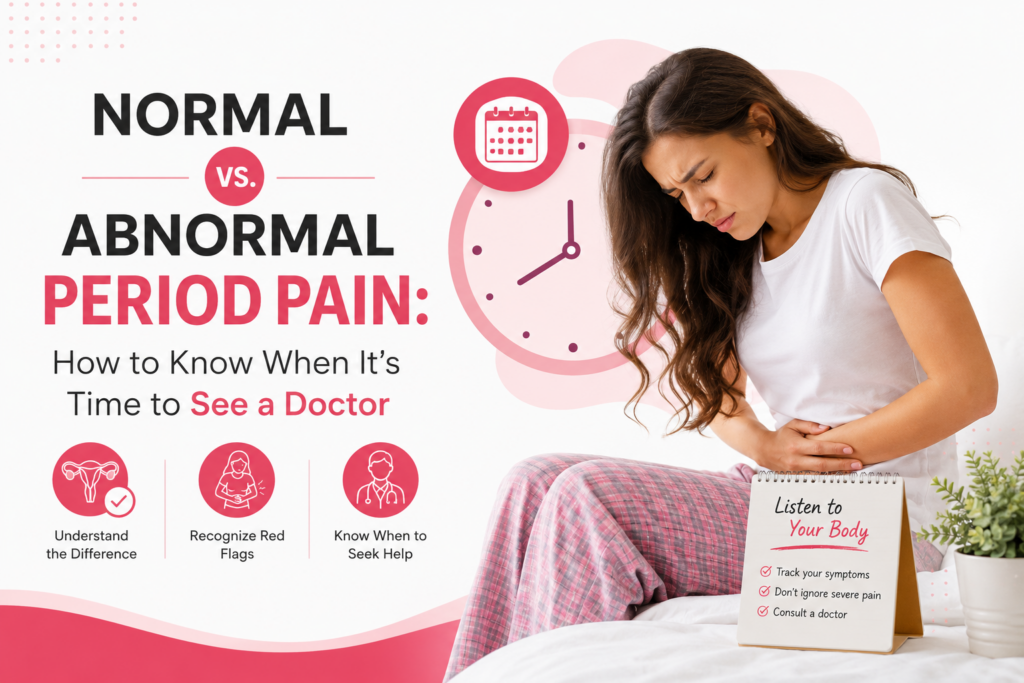
For many women, period pain is a familiar part of the menstrual cycle. Mild cramps that last for a day or two are common and usually not a cause for concern. However, not all period pain is normal. If your menstrual cramps are severe, last for several days, or interfere with your daily routine, they could be a sign of an underlying health condition.
Many women assume that painful periods are something they simply have to live with. Unfortunately, this misconception often delays diagnosis and treatment of conditions like endometriosis, adenomyosis, uterine fibroids, or ovarian cysts.
Understanding the difference between normal and abnormal period pain can help you take timely action and protect your reproductive health
What Is Normal Period Pain?
Normal period pain, medically known as Primary Dysmenorrhea, occurs because the uterus contracts to shed its lining during menstruation. These contractions are triggered by natural chemicals called prostaglandins.
Signs of Normal Period Pain
Normal menstrual cramps usually:
- Begin 1–2 days before or on the first day of your period
- Cause mild to moderate cramping in the lower abdomen
- May spread to the lower back or thighs
- Last for 1–3 days
- Improve with rest, a heating pad, light exercise, or pain relief recommended by your doctor
- Do not significantly affect your daily routine
Although uncomfortable, this type of pain is generally considered a normal part of the menstrual cycle.
What Is Abnormal Period Pain?
Abnormal period pain, also called Secondary Dysmenorrhea, is menstrual pain caused by an underlying medical condition rather than the normal menstrual process.
Unlike normal cramps, this pain is often more intense, lasts longer, and may continue even after your period ends.
7 Warning Signs Your Period Pain May Not Be Normal
If you experience any of the following symptoms, it’s important to consult a gynecologist:
1. Severe Pain Every Month
If your cramps are so painful that they prevent you from going to work, attending college, or carrying out daily activities, they should not be ignored.
2. Heavy Menstrual Bleeding
Bleeding that soaks through a pad or tampon every hour for several hours or passing large blood clots may indicate an underlying condition.
3. Pain Lasting More Than Three Days
Normal cramps usually improve within a couple of days. Persistent pain may require medical evaluation.
4. Pain During Sexual Intercourse
Pain during intimacy is not considered normal and can sometimes be associated with endometriosis or pelvic infections.
5. Pelvic Pain Even Between Periods
Pain that continues even when you’re not menstruating may indicate conditions affecting the reproductive organs.
6. Irregular Menstrual Cycles with Severe Pain
Very painful and irregular periods may be linked to hormonal imbalances or gynecological disorders.
7. Sudden Change in Your Period Pain
If your periods were previously manageable but suddenly become extremely painful, it’s important to seek medical advice.
Common Causes of Abnormal Period Pain
Several medical conditions can cause painful periods.
Endometriosis
Endometriosis occurs when tissue similar to the lining of the uterus grows outside the uterus. It may cause severe cramps, chronic pelvic pain, painful intercourse, and fertility problems.
Adenomyosis
In adenomyosis, the uterine lining grows into the muscular wall of the uterus, leading to painful, heavy periods.
Uterine Fibroids
Fibroids are non-cancerous growths in the uterus that can cause heavy bleeding, pelvic pressure, and painful menstruation.
Ovarian Cysts
Certain ovarian cysts can lead to pelvic discomfort, bloating, and painful periods, especially if they grow larger.
Pelvic Inflammatory Disease (PID)
PID is an infection of the female reproductive organs that can cause pelvic pain, fever, abnormal discharge, and painful menstruation.
How Is Abnormal Period Pain Diagnosed?
To determine the cause of severe period pain, your gynecologist may recommend:
- Detailed medical history
- Physical and pelvic examination
- Pelvic ultrasound
- Blood tests
- Hormonal evaluation (if required)
- MRI or laparoscopy in selected cases
The tests recommended will depend on your symptoms and overall health.
How Can Period Pain Be Managed?
The treatment depends on the underlying cause.
For mild menstrual cramps, your doctor may recommend:
- Using a heating pad
- Staying physically active
- Drinking plenty of water
- Eating a balanced diet
- Getting adequate sleep
- Taking prescribed medications if needed
If an underlying condition such as endometriosis, fibroids, or ovarian cysts is diagnosed, your gynecologist will suggest the most appropriate treatment plan based on your individual needs.
When Should You See a Gynecologist?
Don’t ignore your symptoms if:
- Your pain worsens every month.
- Painkillers no longer provide relief.
- Your periods interfere with work, studies, or daily life.
- You experience unusually heavy bleeding.
- You have pelvic pain even outside your menstrual cycle.
- You’re planning a pregnancy and have severe menstrual pain.
Early diagnosis can help identify treatable conditions and prevent complications.
Tips for Better Menstrual Health
Maintaining good menstrual health starts with healthy lifestyle habits.
- Eat a nutritious and balanced diet.
- Stay physically active.
- Drink enough water throughout the day.
- Manage stress through yoga or meditation.
- Maintain a healthy body weight.
- Track your menstrual cycle.
- Schedule regular gynecological check-ups.
These habits may help improve your overall reproductive health and make it easier to notice changes that require medical attention.
Frequently Asked Questions (FAQs)
Is period pain normal every month?
Mild to moderate cramps are common during menstruation. However, severe pain that disrupts your daily life should be evaluated by a healthcare professional.
Can painful periods affect fertility?
Painful periods themselves do not always affect fertility. However, conditions such as endometriosis or pelvic inflammatory disease can impact fertility if left untreated.
What is the difference between normal and abnormal period pain?
Normal period pain is mild to moderate, lasts for a short time, and usually responds to simple measures like rest or heat therapy. Abnormal pain is more severe, lasts longer, or is associated with symptoms like heavy bleeding, irregular periods, or pelvic pain between cycles.
Should I take painkillers for every period?
Some women may benefit from pain-relieving medications, but it’s best to use them under medical guidance. If you regularly need medication because of severe pain, consult a gynecologist to determine the cause.
Conclusion
Period pain is common, but severe or persistent pain should never be considered “normal.” Listening to your body and recognizing warning signs can help detect underlying conditions early and improve your long-term reproductive health.
If your menstrual pain is affecting your quality of life, don’t ignore it. A timely consultation with a qualified gynecologist can help identify the cause and guide you toward the right treatment.
Stay Informed. Stay Healthy.
Understanding the difference between normal and abnormal period pain is the first step toward taking better care of your health. While mild menstrual cramps are common, severe or persistent pain should never be ignored.
Your body often gives early warning signs when something isn’t right. Paying attention to these symptoms and seeking timely medical advice can help detect potential health concerns early and support better long-term well-being.
At LifeSage Healthcare, our goal is to spread reliable health awareness and empower women with accurate, easy-to-understand information. We believe that informed decisions begin with the right knowledge.
Stay informed, prioritize your health, and never hesitate to consult a qualified healthcare professional if you notice symptoms that concern you.
Medical Disclaimer
The information shared in this blog is intended for educational and awareness purposes only. It should not be considered a substitute for professional medical advice, diagnosis, or treatment. Every individual is different, and if you experience severe, persistent, or unusual symptoms, please consult a qualified healthcare professional for personalized guidance.