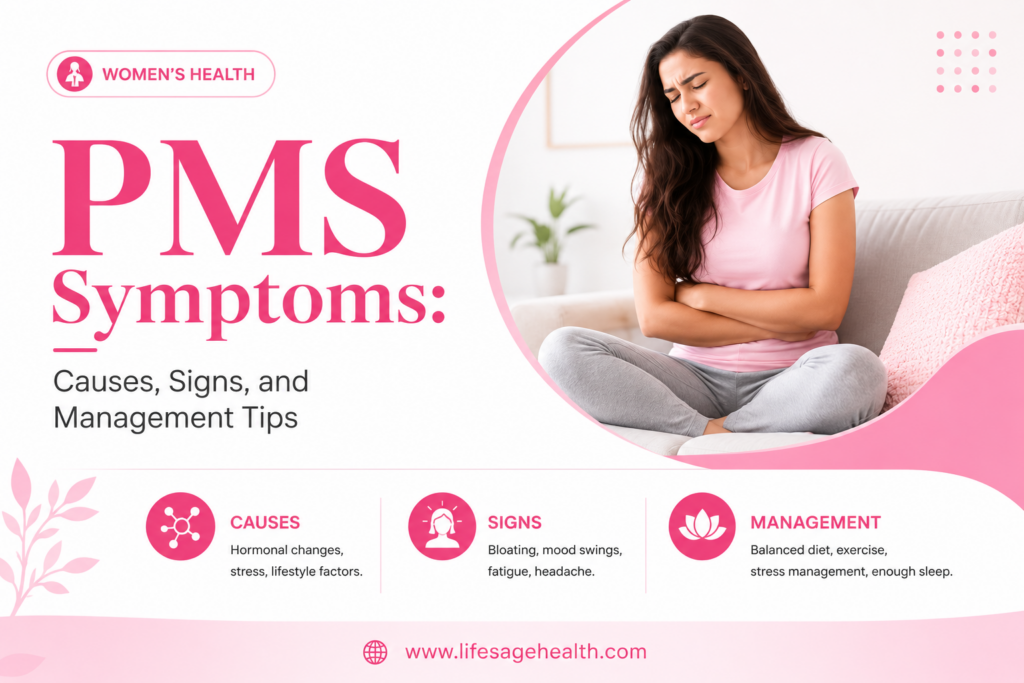
Premenstrual Syndrome, commonly known as PMS, is a group of physical, emotional, and behavioral symptoms that can occur before a menstrual period. For some women, PMS may cause mild discomfort, while for others, symptoms can become strong enough to affect work, studies, sleep, relationships, and everyday activities.
PMS is common, but understanding your symptoms can make it easier to manage them. By recognizing the signs, maintaining healthy lifestyle habits, and knowing when to seek medical advice, you can take better care of your menstrual health.
What Is PMS?
PMS (Premenstrual Syndrome) refers to a combination of symptoms that usually occur during the days or weeks before menstruation. These symptoms are related to changes that occur during the menstrual cycle and often improve once the period begins.
PMS can look different for every woman. Some may experience mainly physical symptoms such as bloating or breast tenderness, while others may notice mood changes, irritability, cravings, or difficulty concentrating.
It is also possible to experience different symptoms from one menstrual cycle to another.
Common Symptoms of PMS
PMS symptoms can be broadly divided into physical symptoms and emotional or behavioral symptoms.
Physical Symptoms
Some of the most common physical symptoms include:
- Abdominal cramps
- Bloating and water retention
- Breast tenderness
- Headaches
- Backache or body aches
- Fatigue or low energy
- Changes in appetite
- Food cravings
- Acne or other skin changes
- Constipation or diarrhea
- Difficulty sleeping
These symptoms can range from mild to more noticeable depending on the individual.
Emotional and Behavioral Symptoms
PMS can also affect mood and mental well-being. Some women may experience:
- Mood swings
- Irritability or anger
- Anxiety
- Feeling sad or more emotional
- Increased sensitivity
- Difficulty concentrating
- Feeling overwhelmed
- Reduced motivation
- Changes in sleep or energy levels
Experiencing occasional mood changes before a period can happen, but symptoms that are severe or significantly affect daily life deserve attention.
What Causes PMS?
The exact cause of PMS is not fully understood. However, hormonal fluctuations during the menstrual cycle are believed to play an important role.
After ovulation, estrogen and progesterone levels change. Some women may be more sensitive to these natural hormonal changes than others.
Changes in brain chemicals such as serotonin may also be associated with certain PMS symptoms, particularly mood-related symptoms.
Other factors that may influence how severe PMS feels include:
- High levels of stress
- Poor sleep
- Lack of physical activity
- Unbalanced eating habits
- Excessive caffeine or alcohol consumption
- Individual hormonal sensitivity
- Existing mental health conditions
PMS is a genuine health concern for many women and should not be dismissed as simply being “part of being a woman.”
PMS and Your Daily Life
For some women, PMS symptoms are manageable and disappear once the period starts. For others, symptoms may interfere with normal routines.
For example, severe fatigue may make it difficult to focus at work or school, while cramps, headaches, or bloating can make physical activities uncomfortable. Mood changes may also affect relationships and communication.
Recognizing your personal PMS pattern can help you prepare for these changes rather than being surprised by them every month.
7 Practical Tips to Manage PMS Symptoms
1. Eat a Balanced Diet
Nutrition plays an important role in overall menstrual health. Try to include vegetables, fruits, whole grains, pulses, lean proteins, nuts, and seeds in your meals.
Some women may benefit from reducing excessive salt, caffeine, highly processed foods, and added sugar if they notice these foods worsen their symptoms.
Instead of skipping meals, try eating regular, balanced meals throughout the day.
2. Stay Physically Active
Regular exercise can support overall physical and emotional well-being and may help with some PMS symptoms.
Activities such as:
- Walking
- Yoga
- Cycling
- Swimming
- Stretching
- Light strength training
can be included according to your comfort and fitness level.
You don’t necessarily need an intense workout. Even regular moderate movement can be beneficial.
3. Prioritize Quality Sleep
Poor sleep can make tiredness, irritability, and difficulty concentrating feel worse.
Try to maintain a consistent sleep and wake schedule. Limiting screen time before bed, creating a relaxing nighttime routine, and keeping your sleeping environment comfortable may also support better sleep.
4. Stay Hydrated
Drinking enough water throughout the day is important for overall health. Staying hydrated may also help some women manage symptoms such as bloating and headaches.
Keep water easily available and make hydration part of your daily routine.
5. Manage Stress
Stress can make some PMS symptoms feel more difficult to manage.
Simple relaxation techniques such as deep breathing, meditation, gentle yoga, journaling, or taking time for hobbies can help support emotional well-being.
Finding a stress-management routine that works for you is more important than following a complicated routine.
6. Track Your Menstrual Symptoms
A menstrual tracking app, calendar, or simple diary can help you understand your cycle.
You can record:
- Period dates
- PMS symptoms
- Pain levels
- Mood changes
- Food cravings
- Sleep quality
- Energy levels
- Exercise
- Any unusual symptoms
Tracking your symptoms for a few menstrual cycles can help you identify patterns and can also provide useful information during a medical consultation.
7. Listen to Your Body
Everyone experiences periods differently. If your body needs more rest during certain days of your cycle, allow yourself time to slow down.
At the same time, don’t automatically assume that severe pain, extreme fatigue, or major mood changes are something you simply have to tolerate.
PMS vs. PMDD: What’s the Difference?
It is important to understand that PMS and Premenstrual Dysphoric Disorder (PMDD) are different.
PMDD is a more severe condition associated with significant emotional and physical symptoms. It can seriously interfere with daily activities, relationships, work, or studies.
Symptoms may include severe irritability, anxiety, depression, mood changes, difficulty concentrating, and other physical symptoms.
If symptoms are severe or consistently interfere with your daily life, speak with a qualified healthcare professional for proper evaluation.
When Should You See a Doctor?
PMS symptoms may be common, but severe or disruptive symptoms should not be ignored.
Consider consulting a healthcare professional if:
- PMS symptoms interfere with your daily routine
- You experience severe or persistent pain
- Mood changes become difficult to manage
- Symptoms affect your work, studies, or relationships
- Symptoms continue well beyond your period
- Your symptoms are becoming progressively worse
- You experience severe anxiety or depression
- You have thoughts of self-harm or feel unsafe
A healthcare professional can review your symptoms and menstrual history and determine whether PMS, PMDD, or another health condition may be responsible.
Can PMS Be Completely Prevented?
There is no guaranteed way to completely prevent PMS, but healthy lifestyle habits may help reduce or manage symptoms for many women.
Regular physical activity, nutritious food, adequate sleep, hydration, stress management, and menstrual tracking are good habits to incorporate into your routine.
If symptoms remain severe despite lifestyle changes, a healthcare professional can discuss appropriate treatment options based on your individual symptoms and health history.
Frequently Asked Questions About PMS
1. How long does PMS usually last?
PMS symptoms commonly occur before menstruation and generally improve once the period begins. The duration and severity can vary between individuals.
2. Can PMS cause mood swings?
Yes. Mood swings, irritability, anxiety, sadness, and increased emotional sensitivity can occur as part of PMS.
3. Does exercise help with PMS?
Regular physical activity may help improve mood and reduce some physical PMS symptoms. Choose activities that are comfortable for your body.
4. Can diet affect PMS symptoms?
Diet may influence how some people experience PMS. Eating balanced meals and limiting foods that personally trigger or worsen symptoms may be helpful.
5. Is severe PMS normal?
PMS is common, but symptoms that significantly interfere with your everyday life should be discussed with a healthcare professional.
Conclusion
PMS is a common part of the menstrual cycle, but every woman’s experience can be different. Physical symptoms such as cramps, bloating, headaches, and fatigue may occur alongside emotional symptoms such as mood swings, irritability, or anxiety.
Understanding your menstrual cycle and recognizing your personal PMS pattern can help you manage symptoms more effectively. A balanced diet, regular physical activity, adequate sleep, hydration, stress management, and symptom tracking can all support better menstrual wellness.
Most importantly, you don’t have to ignore symptoms that are affecting your quality of life. If your PMS symptoms are severe, persistent, or interfering with your daily activities, consider speaking with a healthcare professional.
Taking your menstrual health seriously is not an overreaction — it is an important part of taking care of your overall health.