
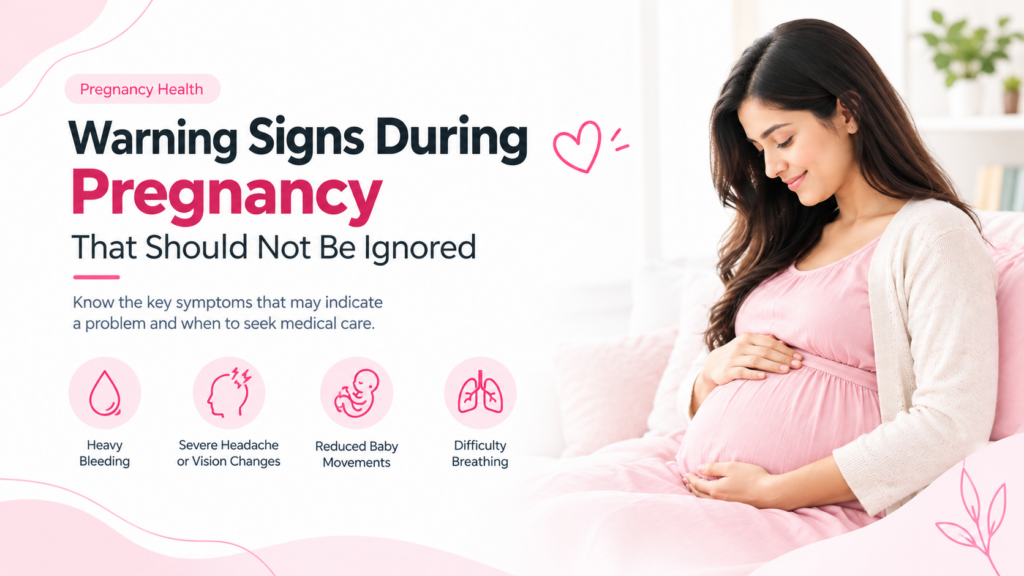
Pregnancy is an exciting and transformative journey, but it also brings many physical and emotional changes. From morning sickness and fatigue to back pain and mild swelling, several symptoms are common during pregnancy. However, some symptoms can indicate a potential complication and should not be ignored.
Understanding the warning signs during pregnancy can help expecting mothers recognize when they need to contact their doctor or seek urgent medical care. While every pregnancy is different, knowing what is unusual for you can make it easier to take timely action.
This guide discusses important pregnancy warning signs that every expecting mother should know.
1. Heavy Vaginal Bleeding
Vaginal spotting or light bleeding can sometimes occur during pregnancy, particularly in early pregnancy. However, heavy vaginal bleeding should never be ignored.
Bleeding that is similar to or heavier than a menstrual period, especially when accompanied by abdominal or pelvic pain, dizziness, weakness, or clots, requires medical evaluation.
Bleeding during later stages of pregnancy can also be associated with pregnancy complications and needs prompt attention.
What to do:
If you experience heavy bleeding or bleeding accompanied by severe pain, contact your healthcare provider immediately or seek emergency medical care.
2. Severe or Persistent Abdominal Pain
Mild abdominal discomfort can occur as the uterus grows and the body adapts to pregnancy. Occasional stretching sensations may not necessarily be concerning.
However, severe, persistent, or worsening abdominal pain should not be dismissed as a normal pregnancy symptom.
Pay particular attention if abdominal pain occurs along with:
- Vaginal bleeding
- Fever
- Repeated vomiting
- Dizziness or fainting
- Shoulder pain
- Severe weakness
These symptoms require medical assessment to determine the underlying cause.
3. Severe Headache or Changes in Vision
Headaches can occur during pregnancy due to hormonal changes, stress, fatigue, dehydration, or other factors. However, a severe headache that does not improve or is different from your usual headaches should be discussed with your healthcare provider.
Vision-related symptoms such as:
- Blurred vision
- Seeing flashing lights
- Temporary loss of vision
- Unusual sensitivity to light
can also require prompt medical evaluation, especially when they occur along with swelling or upper abdominal pain.
Certain pregnancy complications can involve high blood pressure, so these symptoms should not be overlooked.
4. Sudden or Excessive Swelling
Some swelling of the feet and ankles is common during pregnancy, particularly later in pregnancy. It can become more noticeable after standing for long periods or toward the end of the day.
However, sudden or significant swelling of the face, hands, or other parts of the body should be discussed with a healthcare professional.
Swelling becomes more concerning when it occurs together with:
- Severe headache
- Vision changes
- Upper abdominal pain
- Shortness of breath
- A sudden feeling of being unwell
Your healthcare provider may check your blood pressure and perform other assessments if necessary.
5. Difficulty Breathing or Chest Pain
Mild breathlessness can sometimes occur as pregnancy progresses because of physical and hormonal changes.
However, sudden or severe difficulty breathing is not a symptom to ignore.
Seek urgent medical attention if you experience:
- Sudden breathing difficulty
- Chest pain or pressure
- Fainting
- Blue or unusually pale lips
- A very fast or irregular heartbeat
- Severe weakness
These symptoms can have several causes, some of which require immediate evaluation.
6. Persistent Fever or Signs of Infection
Pregnancy can affect the immune system, and infections may require timely treatment.
A persistent or significant fever, especially when accompanied by chills, weakness, painful urination, unusual discharge, severe abdominal pain, or other symptoms, should be discussed with your healthcare provider.
Do not self-medicate during pregnancy without checking with your doctor, even if you have used the medication before pregnancy.
Your healthcare provider can determine the appropriate evaluation and treatment based on your symptoms and stage of pregnancy.
7. Severe or Persistent Vomiting
Morning sickness is common during pregnancy, especially during the first trimester. Nausea and occasional vomiting are often manageable with dietary and lifestyle changes.
However, persistent or severe vomiting can sometimes lead to dehydration and nutritional problems.
Contact your healthcare provider if:
- You cannot keep food or fluids down
- You are urinating much less than usual
- Your urine is very dark
- You feel extremely weak or dizzy
- You are losing weight
- Vomiting is interfering with your daily activities
Early medical guidance can help prevent dehydration and other complications.
8. Reduced or Changed Baby Movements
Once you start regularly feeling your baby’s movements, you may gradually become familiar with your baby’s usual activity pattern.
A noticeable decrease or change in your baby’s normal movement pattern should not be ignored.
Do not rely on home remedies or wait for a long period if you are concerned about reduced movement. Contact your maternity care provider or healthcare facility and follow their instructions.
Your healthcare team may recommend monitoring the baby’s heartbeat and movement depending on your stage of pregnancy and symptoms.
9. Leakage of Fluid From the Vagina
A sudden gush or continuous trickle of fluid from the vagina may indicate that your water has broken.
It can sometimes be difficult to distinguish amniotic fluid from urine or normal vaginal discharge. Therefore, if you experience unusual fluid leakage, especially before your expected due date, contact your healthcare provider.
Pay attention to:
- A sudden gush of fluid
- Continuous watery leakage
- Wetness that keeps returning
- Fluid leakage accompanied by contractions or pelvic pressure
Your healthcare provider can determine whether the fluid is amniotic fluid and advise you on the next steps.
10. Regular or Painful Contractions Before Full Term
As pregnancy progresses, some women may experience occasional abdominal tightening, often called Braxton Hicks contractions.
These contractions are generally irregular and may not progressively become stronger or closer together.
However, regular, painful, or increasingly frequent contractions before full term may need medical assessment.
Be particularly alert if contractions occur with:
- Lower back pain
- Pelvic pressure
- Vaginal bleeding
- Fluid leakage
- Changes in vaginal discharge
Contact your maternity care provider if you are unsure whether what you are experiencing is normal.
11. Severe Dizziness or Fainting
Feeling slightly light-headed can sometimes happen during pregnancy. It may be related to standing up quickly, hunger, dehydration, or changes in circulation.
But repeated or severe dizziness or fainting should be evaluated.
Seek urgent medical attention if fainting or severe dizziness occurs together with:
- Chest pain
- Difficulty breathing
- Severe headache
- Vaginal bleeding
- Severe abdominal pain
- Confusion
- Significant weakness
It is important to identify the underlying cause rather than assuming that dizziness is simply a normal pregnancy symptom.
12. Severe Itching Without a Rash
Skin stretching can cause mild itching during pregnancy. However, intense itching without an obvious rash, particularly on the palms of the hands and soles of the feet, should be discussed with your doctor.
In some cases, severe itching during pregnancy can be associated with a liver condition called intrahepatic cholestasis of pregnancy.
Your doctor may recommend blood tests or other investigations based on your symptoms.
Do not ignore persistent or severe itching simply because there is no visible rash.
13. Pain or Burning During Urination
Urinary changes are common during pregnancy, but pain, burning, frequent painful urination, blood in the urine, fever, or lower abdominal discomfort may indicate a urinary tract infection.
Pregnancy-related infections should be evaluated by a healthcare professional because untreated infections can sometimes lead to complications.
If you notice urinary symptoms, speak with your doctor rather than taking antibiotics or other medicines on your own.
14. Sudden Severe Weakness or Feeling Very Unwell
Sometimes, a pregnant woman may simply feel that something is not right.
A sudden feeling of severe weakness, confusion, unusual drowsiness, difficulty staying conscious, or a significant change in your overall condition should be taken seriously.
You know your body better than anyone. If a symptom feels unusual, severe, or rapidly worsening, it is better to seek professional medical advice instead of waiting.
When Should You Seek Emergency Medical Help?
Some symptoms during pregnancy require immediate medical attention.
Seek emergency care if you experience:
- Heavy vaginal bleeding
- Severe or sudden abdominal pain
- Severe difficulty breathing
- Chest pain
- Loss of consciousness
- Seizures
- Severe headache with vision changes
- Significant reduction in your baby’s usual movements
- Severe weakness or confusion
- A sudden gush or continuous leakage of fluid with other concerning symptoms
- Any symptom that feels severe, sudden, or life-threatening
When in doubt, contact your healthcare provider or local emergency medical service.
How Can You Stay Safer During Pregnancy?
While not every pregnancy complication can be prevented, regular prenatal care can help healthcare professionals monitor your health and your baby’s development.
Some helpful habits include:
Attend Regular Prenatal Checkups
Regular appointments allow your healthcare provider to monitor blood pressure, baby’s growth, and other important aspects of pregnancy.
Follow Recommended Tests
Your doctor may recommend blood tests, urine tests, ultrasounds, or other investigations at different stages of pregnancy. Follow the schedule recommended for you.
Stay Hydrated
Drink adequate fluids unless your healthcare provider has advised you otherwise. Dehydration can contribute to several uncomfortable symptoms.
Eat a Balanced Diet
A nutritious diet can support your changing nutritional needs during pregnancy. Your doctor may also recommend specific vitamins or supplements depending on your individual needs.
Avoid Self-Medication
Not every medicine, supplement, or herbal product is suitable during pregnancy. Always check with your healthcare provider before starting a new medication or supplement.
Pay Attention to Changes
Keep track of symptoms that are unusual for you, including changes in pain, bleeding, swelling, or baby’s movement pattern after movements have become established.
Final Thoughts
Pregnancy comes with many normal changes, but it is important to recognize symptoms that may require medical attention. Heavy bleeding, severe abdominal pain, severe headache, vision changes, sudden swelling, breathing difficulties, persistent vomiting, reduced baby movements, fluid leakage, and other unusual symptoms should not be ignored.
At the same time, experiencing a warning sign does not automatically mean that something is seriously wrong. Many symptoms can have different causes, and only a qualified healthcare professional can properly evaluate your individual situation.
The safest approach is simple: if something feels unusual, severe, persistent, or different from what you normally experience, contact your healthcare provider.
Timely medical advice, regular prenatal checkups, and awareness of warning signs can help you make informed decisions throughout your pregnancy journey.
Medical Disclaimer
This article is intended for general educational and informational purposes only. It is not a substitute for professional medical advice, diagnosis, or treatment. Pregnancy symptoms can vary from person to person. Always consult your qualified healthcare provider for advice based on your individual health and pregnancy. If you experience a severe or potentially life-threatening symptom, seek emergency medical care immediately.