
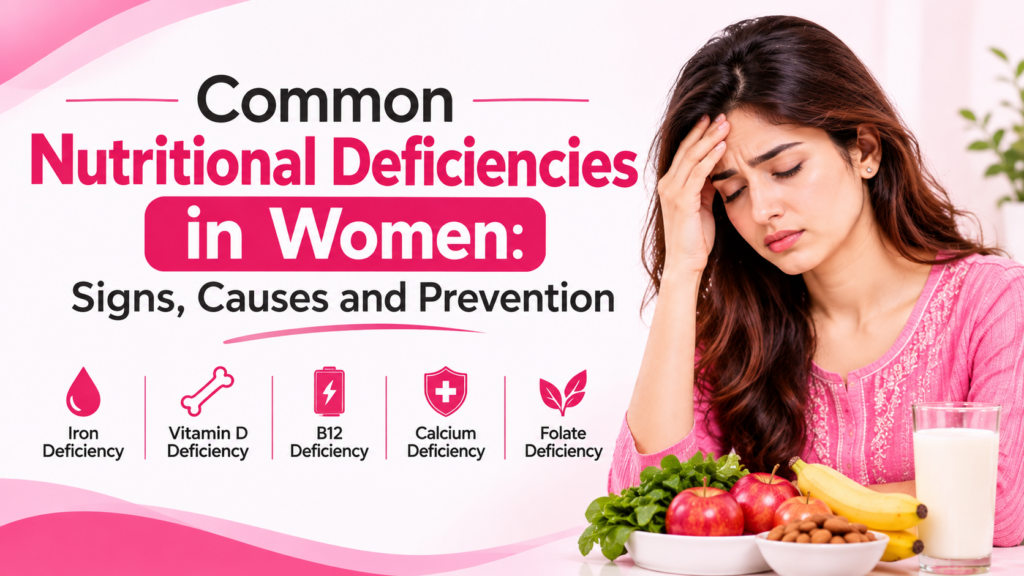
Good nutrition is essential for women’s energy, bone strength, immunity, and reproductive health. Menstruation, pregnancy, breastfeeding, menopause, and dietary habits can influence nutritional needs, increasing the risk of certain deficiencies.
Recognizing warning signs and maintaining a balanced diet can help prevent long-term health complications.
1. Common Nutritional Deficiencies in Women
Women may experience different nutritional deficiencies depending on their age, lifestyle, dietary habits, and health conditions. Below are some common deficiencies, their warning signs, and important food sources.
| Nutrient | Key Warning Signs | Important Food Sources |
|---|---|---|
| Iron | Fatigue, dizziness, pale skin, weakness | Lentils, beans, leafy greens, meat, fortified cereals |
| Vitamin D | Bone pain, muscle weakness, reduced bone strength | Fatty fish, egg yolks, fortified milk |
| Vitamin B12 | Fatigue, tingling, numbness, memory problems | Dairy, eggs, fish, fortified foods |
| Calcium | Low intake may weaken bones over time, often without early symptoms | Milk, curd, ragi, calcium-set tofu |
| Folate (B9) | Fatigue, mouth ulcers, anemia | Leafy vegetables, lentils, beans, fortified grains |
| Magnesium | Muscle cramps, weakness, loss of appetite | Nuts, seeds, whole grains, legumes |
| Zinc | Poor wound healing, hair loss, changes in taste | Pumpkin seeds, chickpeas, nuts, dairy |
| Vitamin C | Bleeding gums, easy bruising, poor wound healing in severe deficiency | Amla, guava, citrus fruits, bell peppers |
| Protein | Muscle loss, weakness, slow recovery | Dal, paneer, eggs, soybeans, fish |
Note: These symptoms are not specific to nutritional deficiencies and may have other medical causes.
2. Why Are Women at Greater Risk?
Women may have an increased risk of certain nutritional deficiencies due to various biological and lifestyle factors.
- Menstruation: Heavy menstrual bleeding increases the risk of iron deficiency.
- Pregnancy and Breastfeeding: Nutrient requirements increase to support maternal and infant health.
- Restrictive Diets: Poorly planned vegetarian, vegan, or low-calorie diets may lack key nutrients.
- Menopause and Aging: Hormonal changes increase concern about bone health.
- Medical Conditions: Digestive disorders and certain medications can affect nutrient absorption.
3. Health Risks of Untreated Nutritional Deficiencies
Ignoring nutritional deficiencies can affect overall health and may lead to long-term complications.
- Anemia: Associated with iron, folate, or vitamin B12 deficiency.
- Weak Bones: Inadequate calcium and vitamin D can compromise bone health.
- Nerve Damage: Prolonged vitamin B12 deficiency may cause neurological complications.
- Impaired Immunity and Healing: Inadequate zinc, vitamin C, or protein can affect normal immune and tissue-repair functions.
- Pregnancy Complications: Inadequate folate increases the risk of neural tube defects.
4. How to Prevent Nutritional Deficiencies
Maintaining a balanced diet and following healthy lifestyle habits can help reduce the risk of nutritional deficiencies.
- Eat Balanced Meals: Include vegetables, fruits, whole grains, pulses, and protein in your daily diet.
- Improve Iron Absorption: Combine plant-based iron sources with vitamin C-rich foods.
- Support Bone Health: Include adequate calcium, vitamin D, and protein to support bone and muscle health.
- Ensure Vitamin B12 Intake: Maintain reliable vitamin B12 intake, particularly with vegan diets.
- Stay Physically Active: Include regular physical activity and weight-bearing exercises.
- Use Supplements Carefully: Take supplements according to individual needs and professional advice.
Important: The CDC recommends 400 micrograms of folic acid daily for women who can become pregnant to help prevent neural tube defects. Individual pregnancy-related requirements should be discussed with a healthcare professional.
5. When Should You Consult a Doctor?
It is important to seek medical advice if you experience persistent fatigue, unexplained hair loss, frequent dizziness, muscle weakness, or tingling in your hands and feet.
Depending on your symptoms and risk factors, a doctor may recommend tests such as:
- Complete Blood Count (CBC)
- Ferritin Test
- Vitamin B12 Test
- Other appropriate tests based on individual health requirements
Routine testing for every nutrient is not necessary for everyone. A healthcare professional can help determine which tests are appropriate.
Conclusion
Nutritional deficiencies can affect women’s health at every life stage. A varied diet, awareness of warning signs, and timely medical assessment can help prevent complications.
Early identification and appropriate treatment are more effective than taking supplements without confirming a need.
References
- National Institutes of Health (NIH), Office of Dietary Supplements: Vitamin and Mineral Supplement Fact Sheets.
https://ods.od.nih.gov/FactSheets/List-VitaminsMinerals/ - Centers for Disease Control and Prevention (CDC): Folic Acid – Sources and Recommended Intake.
https://www.cdc.gov/folic-acid/about/intake-and-sources.html - American College of Obstetricians and Gynecologists (ACOG): Healthy Eating During Pregnancy.
https://www.acog.org/womens-health/faqs/healthy-eating-during-pregnancy - U.S. Preventive Services Task Force (USPSTF): Folic Acid Supplementation to Prevent Neural Tube Defects (2023).
https://www.uspreventiveservicestaskforce.org/uspstf/recommendation/folic-acid-for-the-prevention-of-neural-tube-defects-preventive-medication
Disclaimer: This article is for educational purposes and does not replace professional medical advice.