
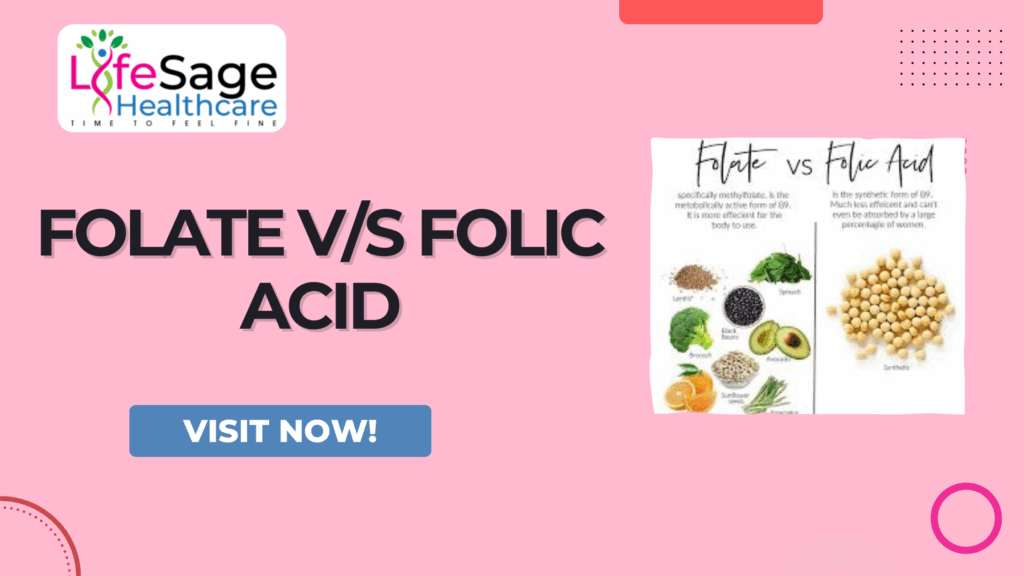
What Are Folate and Folic Acid?
Folate and folic acid are two forms of Vitamin B9, which your body needs for cell growth, brain function, and pregnancy health. Although both are essential, they are not the same. Folate occurs naturally in food, while folic acid is the synthetic form found in supplements and fortified foods.
What Is Folate? (Natural Vitamin B9)
Folate is the naturally occurring form of Vitamin B9. It supports red blood cell formation, DNA repair, and fetal development. Moreover, it is easier for the body to absorb because it does not require extra conversion.
Natural Sources of Folate
- Leafy greens
- Lentils
- Broccoli
- Avocado
- Nuts and seeds
- Eggs
- Citrus fruits
These foods help your body naturally maintain healthy levels of folate.
What Is Folic Acid? (Synthetic Vitamin B9)
Folic acid is the synthetic version of Vitamin B9. It is commonly added to supplements and fortified foods. However, the body needs to convert folic acid into its active form before using it, which may take longer.
Where You Find Folic Acid
- Multivitamins
- Fortified cereals
- Fortified bread and flour
Key Differences Between Folate and Folic Acid
Understanding the differences helps you choose the right form for your health. For example, folate is absorbed easily, whereas folic acid takes more time to convert into usable Vitamin B9.
| Feature | Folate | Folic Acid |
|---|---|---|
| Source | Natural food | Supplements |
| Absorption | Faster | Slower conversion |
| Best For | Daily health | Pregnancy |
| Safety | Very safe | Excess may stay in blood |
Why Vitamin B9 Is Important
Vitamin B9 plays several important roles in the body. In addition, it helps maintain healthy energy levels and brain function.
1. Essential for Pregnancy
Folic acid helps prevent neural tube defects. Therefore, doctors recommend 400–600 mcg daily for women trying to conceive.
2. Supports Brain Health
Vitamin B9 supports cognitive function and mood. Consequently, it reduces the risk of mental fatigue and memory problems.
3. Improves Heart Health
It helps control homocysteine levels, which may reduce heart disease risk.
4. Boosts Immunity
Vitamin B9 plays a key role in producing healthy cells, which strengthens immunity.
Which One Should You Choose?
Choosing between folate and folic acid depends on your health goals.
- Choose folate if you prefer natural absorption and food-based nutrition.
- Choose folic acid if you are pregnant or trying to conceive, because it offers medically proven benefits.
Similarly, people with deficiencies may need folic acid supplements for faster improvement.
Recommended Daily Intake
- Adults: 400 mcg
- Pregnant women: 600 mcg
- Breastfeeding: 500 mcg
Finally, speak with a doctor for personalized dosage recommendations.
Frequently Asked Questions
1. Can I take both folate and folic acid?
Yes, but it is better to consult your healthcare provider.
2. Is folate safer?
Folate is naturally safe, while excess folic acid may stay unconverted in the blood.
3. Do I need supplements if I eat healthy?
If you are pregnant or planning pregnancy, supplements are still recommended.
4. What food has the highest folate?
Leafy greens, lentils, and citrus fruits are excellent sources.
5. Can men take folic acid?
Yes, because Vitamin B9 supports fertility, energy, and heart health.